Who Are the Top Prehung Exterior Door Suppliers in China?

China is a major sourcing destination for exterior doors, but “top supplier” can mean very different things: export volume, manufacturing capacity, customization, or dependable quality control. For buyers comparing prehung exterior door manufacturers, the important details are often practical: frame dimensions, weather seals, hardware preparation, finish consistency, and packaging that protects corners during shipment. A polished catalog helps. It does not prove performance.

The Global Alliance for Buildings and Construction’s 2023 Global Status Report states that buildings accounted for 34% of global energy demand and 37% of energy- and process-related carbon dioxide emissions in 2022. Those figures cover the building sector, not doors specifically, but they underline why product fit and thermal performance deserve attention. Trade data can add another useful check. UN Comtrade records wooden doors and frames under HS code 441820, though this category does not distinguish prehung units or verify factory capability. That limitation matters. This guide compares Chinese suppliers through evidence buyers can investigate, including product specifications, testing documentation, export experience, and communication practices. It also recognizes that public information may be incomplete, and a supplier’s claims still need confirmation. No single ranking suits every project. The best choice depends on climate, building requirements, budget, and how carefully each order is checked before production.
Who Are the Top Prehung Exterior Door Suppliers in China?

What Is a Prehung Exterior Door and How Is It Supplied in China?

Who Are the Top Prehung Exterior Door Suppliers in China?

What Is a Prehung Exterior Door and How Is It Supplied in China?

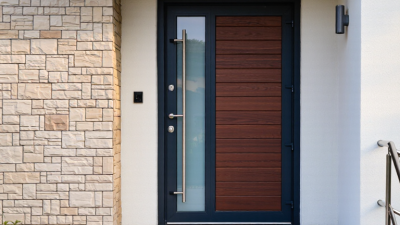
A prehung exterior door arrives with its slab already mounted in a frame. The assembly may include hinges, weatherstripping, a threshold, and prepared lock holes. This can simplify installation, but only when the frame dimensions match the wall opening. A door is not just a slab. The frame, swing direction, and sill detail matter too.

In China, suppliers commonly manufacture assemblies to project drawings or agreed measurements. Buyers usually confirm the opening size, wall thickness, handing, finish, glazing, and hardware before production. The order may ship with protective corner guards and moisture-resistant wrapping. Ask for a specification sheet, packing details, and photos of a sample assembly. These checks help clarify what is included, since supply scopes can vary. A drawing can look perfect, yet a small measurement error may complicate fitting on site.

How Is China’s Prehung Exterior Door Supplier Market Organized?

China’s prehung exterior door market is organized around several connected supplier types. Large manufacturers usually control door-leaf production, frame assembly, finishing, and volume scheduling. Smaller factories may focus on made-to-measure sizes or particular materials. Export-oriented trading companies can coordinate sourcing, packing, and shipping, but may not own production lines. The structure is practical, not always tidy.

Regional manufacturing clusters bring together suppliers of steel skins, timber components, hinges, seals, and surface coatings. This can shorten lead times, yet quality may vary between production batches. A prehung unit is more than a door slab: frame squareness, hinge placement, weatherstripping, and threshold fit all affect installation. Ask suppliers for dimensional drawings, material specifications, inspection records, and clear packaging details. Requesting a sample can reveal finish or alignment issues that photographs miss. I would still verify claims independently; paperwork alone is not proof.

Tips: Confirm the rough-opening size, handing, swing direction, and climate exposure before comparing quotations. Ask who handles final assembly and what checks happen before packing. Small details matter. A low price may exclude hardware or protective wrapping, so compare itemized offers rather than headline figures.

Which Suppliers Are Recognized in China’s Prehung Exterior Door Market?

China’s prehung exterior door market includes several supplier types, rather than one universally accepted leader. Integrated manufacturers are often recognized for producing door slabs, frames, and factory-fitted hardware under one roof. This setup can improve dimensional consistency. It also simplifies coordination. Export-focused factories are another visible group. They commonly offer steel, fiberglass, or engineered-wood systems, with jamb depth and swing direction configured for project requirements.

Regional manufacturers may stand out through custom sizing, finish options, and direct communication. Buyers often compare suppliers by test documentation, moisture protection, packaging, and installation drawings. Ask whether the quoted unit includes hinges, weatherstripping, a threshold, and lock preparation. Small omissions can change the landed cost. A showroom sample may look precise, while batch variation still needs checking.

Recognition should be judged by repeatable delivery, not polished catalogs alone. Request recent production photos, sample inspection records, and clear tolerances for frame squareness and door gaps. Confirm how the factory protects corners and glass during shipping. These checks help. They cannot remove every risk; color matching and local installation conditions can still disappoint. A careful shortlist includes factories willing to explain limitations, not just promise customization.

Who Are the Top Prehung Exterior Door Suppliers in China?

A practical framework for assessing suppliers in China’s prehung exterior door market

The chart presents illustrative procurement-priority weights, not market-share figures, survey results, or supplier rankings. Buyers commonly compare product performance, certifications, customization, quality control, and export support; verify each supplier’s claims and test documentation independently.

How Do Chinese Suppliers Differ in Products, Certifications, and Export Reach?

Chinese prehung exterior door suppliers differ most in how complete and adaptable their assemblies are. Some offer standard door slabs with jambs, hinges, weatherstripping, and thresholds; others can adjust frame depth, swing direction, glazing, or hardware placement. A useful comparison starts with the full assembly, not the door leaf alone. Ask for drawings and a sample specification. A small detail matters: a threshold suited to a sheltered entry may not perform well where wind-driven rain is common.

Certifications also need careful checking. Requirements vary by destination and may cover fire performance, energy efficiency, material emissions, or other properties. A factory certificate does not automatically verify every door configuration. Request reports that identify the tested model, materials, and test method, then compare them with the product being quoted. This step can feel tedious. It is still worthwhile.

Export reach shows up in practical details, not just a list of countries served. Experienced exporters can explain packing methods, container loading, lead times, and how they protect glazed units and frame corners during transit. Ask whether packaging suits your route and whether replacement parts are available. Their answers may reveal gaps; suppliers do not always document every issue equally well. That uncertainty deserves a follow-up, especially before placing a large order.

How Can Buyers Evaluate Prehung Exterior Door Suppliers for Their Projects?

Evaluate suppliers through evidence, not showroom polish. Request recent test reports for the exact door construction, size, glazing, and hardware you plan to buy. Check air leakage, water penetration, structural performance, and thermal values. A report for a similar model may not cover your specification. Ask for evidence.

The U.S. Energy Information Administration’s 2020 Residential Energy Consumption Survey attributes roughly 42% of U.S. household energy use to space heating. That figure makes a door’s insulation and sealing details worth careful review. Compare U-factor and weather-seal specifications, then confirm how the supplier controls frame squareness, threshold fit, and finish consistency. A sample can look excellent; production units still need inspection.

Assess the factory’s quality process, traceability, and corrective-action records. Request photos or video of packaging, corner protection, and moisture barriers, especially for long-distance shipping. Agree on a pre-production sample, written tolerances, inspection stages, and a clear process for handling defects. Verify lead times against past orders, not just sales estimates. Ask for references from projects with similar climate exposure and installation methods. Small gaps matter. A supplier’s willingness to explain test limits and share incomplete findings can be more useful than a flawless brochure.

Who Are the Top Prehung Exterior Door Suppliers in China? - How Can Buyers Evaluate Prehung Exterior Door Suppliers for Their Projects?
Evaluation Dimension What Buyers Should Request How to Verify It Suggested Weight
Product and project fit Door material, frame material, opening direction, dimensions, finish, glazing, hardware, and installation details matched to the project schedule. Compare a completed technical submittal and shop drawings against the project specification. Confirm whether the quotation covers the leaf, frame, threshold, seals, hardware, and required accessories. 15%
Weather and performance evidence Test reports relevant to the destination market and the specified door configuration. For applicable European projects, ask whether the external pedestrian doorset has documentation under EN 14351-1 and verify the declared characteristics and configuration. For US projects, ask for reports using relevant methods such as ASTM E283 for air leakage, ASTM E331 for water penetration, and ASTM E330 for structural performance. Confirm test scope, specimen size, and laboratory details. 20%
Applicable codes and fire requirements Evidence that the proposed doorset meets local building, energy, accessibility, and fire requirements where applicable. Check the destination jurisdiction’s requirements with the project’s design or code professional. If a fire-rated assembly is required, request test and listing documentation for the complete doorset, including the frame, hardware, glazing, and installation conditions. 15%
Quality management and production control Documented inspection procedures, incoming-material checks, in-process controls, final inspection records, and corrective-action process. Review the quality manual or inspection plan, sample records, and audit evidence. An ISO 9001 certificate can indicate a quality-management system, but it does not by itself certify a door’s performance or suitability. 15%
Factory capability and capacity Evidence of relevant production equipment, trained staff, traceable work orders, and capacity for the project’s mix and volume. Use a factory audit or live video walkthrough. Trace a sample order from material receipt through production, inspection, packing, and shipment; compare the planned output with the required delivery schedule. 10%
Materials and durability Material specifications for the door leaf, frame, core, coatings, seals, fasteners, and hardware, including options suited to the project’s exposure. Request technical data sheets and finish samples. Confirm the specified materials and finish match the tested or approved configuration, and ask how corrosion, moisture, UV exposure, and maintenance are addressed for the site conditions. 10%
Samples and pre-production approval A representative sample, finish sample, or approved first article before full production. Agree in writing on sample dimensions, hardware, finish, tolerances, packaging, and approval criteria. Record any approved changes before mass production. 5%
Commercial terms and delivery Itemized pricing, production lead time, payment terms, Incoterms® 2020 delivery rule, packaging specification, and replacement-part policy. Compare like-for-like quotations and confirm the named place or port, responsibility for freight and insurance, shipment documents, and schedule assumptions in the contract. 5%
Communication and after-sales support A named project contact, documented response process, installation guidance, warranty terms, and a process for claims or spare parts. Ask scenario-based questions and assess the clarity and consistency of written responses. Confirm warranty coverage, exclusions, claim evidence, and response responsibilities in the contract. 5%
Total suggested evaluation weight 100%

Use this as a buyer’s evaluation scorecard, not as a ranked list of named suppliers. The suggested weights are adjustable to project priorities; applicable standards and code requirements depend on the destination market and the specified doorset.