Why Choose Teak Plywood for Global Projects?
Teak Plywood is often selected when projects demand strength, stable performance, and a refined natural appearance. Its warm brown grain can suit marine interiors, luxury furniture, hospitality spaces, and exterior design features. In a busy workshop, its surface may remain visually consistent after cutting, sanding, and careful sealing.
Performance matters more than appearance alone. Teak is naturally resistant to moisture, insects, and dimensional movement, although plywood quality depends on core construction and adhesive selection. Experienced buyers should request technical data, veneer grades, thickness tolerances, and emission information before placing international orders. Certification can also help verify responsible sourcing and supply-chain practices.
Global projects face changing climates, transport conditions, and installation methods. Teak Plywood may perform well in humid coastal regions, but it is not maintenance-free. Poor edge sealing, unsuitable fasteners, or prolonged standing water can still cause failure. That point is easy to overlook. Project teams should test samples under expected conditions and confirm compliance with local building requirements.
Reliable suppliers provide traceable documentation, consistent packaging, and realistic lead-time information. They also explain whether panels are suitable for interior, exterior, or marine applications. Cost should be assessed across the full service life, not only the purchase invoice. A cheaper panel may require earlier repairs, extra coatings, or replacement. Teak Plywood is not the universal answer, but with careful specification, it can offer a practical balance of durability, beauty, and long-term value for demanding global projects.
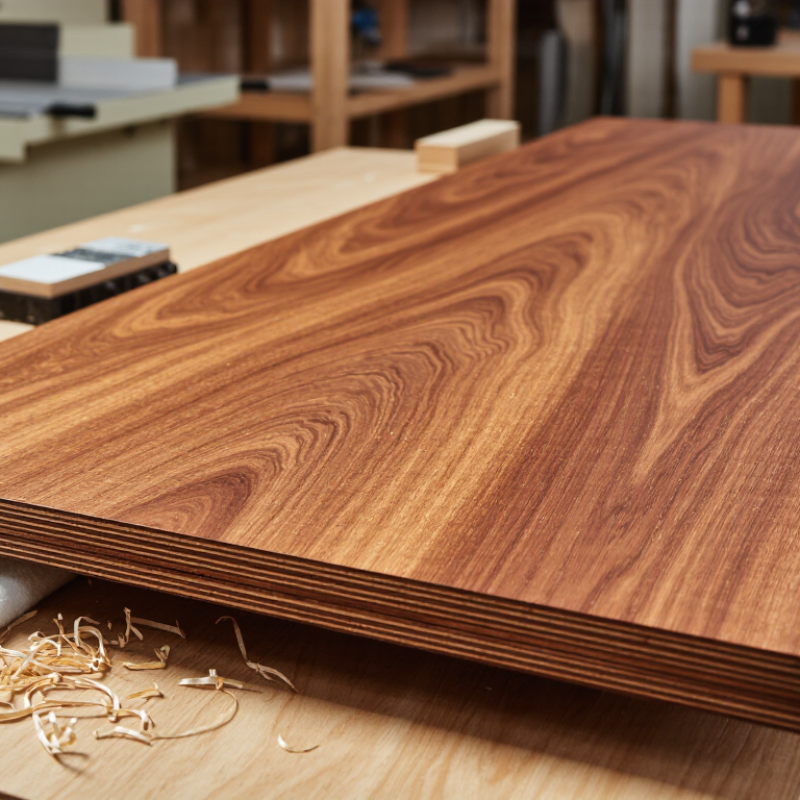
Teak plywood is an engineered panel made from thin wood veneers bonded in layers. A teak face veneer provides the visible surface, while the inner core usually uses other compatible wood species. Cross-grained layers improve dimensional stability and reduce warping. The exact structure depends on veneer thickness, adhesive quality, and manufacturing controls.
In workshop use, teak plywood feels dense, smooth, and steady under careful cutting. Its natural oils can help resist moisture, insects, and surface wear. However, teak plywood is not automatically waterproof. Edges still need sealing, especially around sinks, boat interiors, and outdoor furniture. The golden-brown surface may include darker streaks, small knots, or changing grain directions. These details can look attractive, but they make matching panels difficult.
For international projects, buyers should check the core material, formaldehyde emissions, veneer thickness, moisture rating, and test documentation. Local climate also matters. A panel that performs well in a dry interior may move in humid coastal conditions. I have seen polished faces hide weak edges, which caused trouble during installation. That experience changed how I inspect plywood: I now examine the panel edges, back veneer, flatness, and bonding lines before approval. Teak plywood remains practical, but its performance depends on construction, certification, storage, and honest project specifications. Some assumptions still need testing.

Why Choose Teak Plywood for Global Projects?
How Teak Plywood Is Manufactured for International Use
Teak plywood begins with carefully selected Tectona grandis logs. Manufacturers peel or slice veneers, then inspect thickness, grain, and surface defects. Veneers are dried before bonding. Moisture control matters because humid routes can cause swelling, warping, or weak glue lines. International factories often target approximately 6–12% veneer moisture, depending on regional conditions and product specifications. Phenolic or other exterior-grade adhesives may support demanding applications, but the adhesive must match the intended exposure.
Hot pressing creates the panel’s structure. Operators control temperature, pressure, and pressing time. Each sheet may then receive trimming, sanding, edge inspection, and formal testing. ISO 12465 provides internationally recognized plywood specification guidance, while ASTM D1037 covers several wood-panel performance tests. The FAO Global Forest Resources Assessment 2020 recorded about 4.06 billion hectares of forests worldwide. That figure reinforces a practical point: responsible sourcing and traceability cannot be treated as optional details. Certification records, legality documents, and batch identification should travel with the shipment.
Tips: Request veneer species confirmation, adhesive classification, emission data, and test reports before approval. Check panel thickness at several points. Small variations become costly during installation. No manufacturing process is flawless. I have seen attractive faces hide uneven cores, so visual quality should never replace structural testing. Buyers should also compare standards carefully, because “marine,” “exterior,” and “water-resistant” can describe different performance levels across markets.
Teak plywood for international projects requires consistent moisture control before bonding and finishing. The values below show typical target ranges used in plywood production; actual settings vary with veneer thickness, adhesive system, panel construction, climate, and applicable standards.
Why Choose Teak Plywood for Global Projects?
Performance Benefits in Different Global Project Environments
Global projects rarely face one climate. A coastal hotel may endure salt air, while an inland facility faces dry heat and sharp temperature changes. Teak plywood offers useful stability when these conditions vary. Its dense structure can resist everyday impact and surface wear. It also handles humid environments well when edges, joints, and faces receive proper sealing. Small details matter.
In tropical construction, sealed teak plywood can support wall panels, doors, furniture, and sheltered exterior elements. Its natural oils may help resist moisture-related deterioration, but they do not replace regular maintenance. In colder regions, stable bonding becomes important as materials expand and contract. Correct adhesive selection and controlled installation reduce cracking risks. Yet, poor ventilation can still create hidden moisture problems.
Projects near the sea need more than attractive timber. Fasteners should resist corrosion, and exposed surfaces need inspection after harsh weather. In dry climates, gradual moisture loss may cause movement, especially around unsealed cut edges. Teak plywood is also heavier and often more expensive than common alternatives. That can affect transport planning and structural calculations. It is not always the best choice.
Reliable specifications should define veneer quality, core construction, thickness tolerance, adhesive performance, and testing requirements. Samples should remain in the project environment before installation when schedules allow. I have seen material decisions fail because appearance received more attention than edge protection. Performance depends on the whole assembly, not the panel alone. Even excellent plywood needs careful handling.
Global projects demand more than attractive grain. Teak plywood must survive humidity, handling, and different building rules. The FAO Global Forest Resources Assessment 2020 records 4.06 billion hectares of forest worldwide. It also reports 420 million hectares lost since 1990. That context makes legal origin and traceability practical quality issues, not decorative paperwork.
Check the applicable plywood standard before ordering. EN 636 classifies plywood by moisture and exposure conditions. EN 13986 supports performance assessment for wood-based panels used in construction. ISO 12466-1 helps evaluate bonding quality through defined tests. For North American projects, U.S. EPA TSCA Title VI limits formaldehyde emissions from hardwood plywood to 0.05 ppm. Requirements differ by market. Confirm them early.
Ask for third-party chain-of-custody certification, species documentation, and production-batch records. Then inspect the panels yourself. Look for consistent veneer thickness, tight joints, sealed edges, flatness, and clean sanding. Moisture readings should match the intended installation environment. A certificate is evidence, not proof of every sheet. I have seen attractive faces hide core gaps. That mistake becomes expensive after installation. Laboratory test reports should identify the exact product, test method, date, and sampling basis. The FAO State of the World’s Forests 2022 notes that annual forest loss slowed to about 10 million hectares between 2015 and 2020, yet sourcing details still require careful verification.
Teak plywood suits global projects where appearance, dimensional stability, and outdoor exposure matter. Marine interiors, yacht cabinetry, hotel bathrooms, entrance doors, and shaded façade panels are common applications. However, teak is not automatically waterproof. The panel design, adhesive system, edge sealing, and installation details control performance.
The FAO Global Forest Resources Assessment 2020 recorded 4.06 billion hectares of global forest, equal to 31% of the world’s land area. That scale makes responsible sourcing essential. Buyers should request the botanical species, harvest region, veneer origin, core composition, and chain-of-custody documents. ITTO market reports repeatedly highlight traceability as a major requirement in tropical timber trade. I would also check face thickness, voids, bonding quality, and formaldehyde emissions. A beautiful surface can hide weak construction.
Maintenance begins before installation. Store sheets flat, raised from concrete, and protected from direct rain. Leave acclimation time at the project site. The USDA Forest Products Laboratory’s Wood Handbook notes that wood responds continuously to changing moisture conditions, so exposed panels need balanced sealing on all faces and edges. Clean teak with mild soap and fresh water. Avoid aggressive sanding. Recoat when the surface becomes dry, uneven, or grey. In practice, dark finishes may demand more frequent inspection under strong sunlight. That detail is easy to overlook. A cost-saving specification can become expensive after one wet season.
| Category | Key Dimension | Practical Data or Typical Range | Why It Matters for Global Projects |
|---|---|---|---|
| Material Profile | Core and face veneer | Multi-layer plywood with teak face veneers; the core may use other wood species depending on the product specification. | The visible teak layer provides the appearance and surface characteristics, while the core largely influences stability, strength, and weight. |
| Common Applications | Interior and sheltered exterior use | Cabinetry, wall panels, doors, furniture, decorative partitions, marine interiors, and covered outdoor joinery. | Application suitability depends on the panel grade, adhesive class, edge protection, local climate, and exposure to liquid water. |
| Typical Thickness | Panel thickness | Common commercial options include approximately 4, 6, 9, 12, 15, 18, and 25 mm; availability varies by market and specification. | Thickness should be selected according to span, fixing method, load, machining requirements, and applicable local building rules. |
| Panel Formats | Sheet dimensions | Common nominal formats include 1220 × 2440 mm and 1250 × 2500 mm, subject to supplier production and regional standards. | Confirm actual dimensions, tolerances, squareness, and usable face quality before finalizing cutting layouts or container quantities. |
| Moisture Control | Equilibrium moisture and acclimatization | Store panels flat in a dry, ventilated area and allow them to acclimatize to the installation environment before machining or installation. | Wood-based panels respond to changes in humidity; acclimatization helps reduce later movement, joint opening, and surface distortion. |
| Adhesive Selection | Bond durability | Select an adhesive system rated for the intended exposure, such as dry interior, humid interior, or exterior service, and verify compatibility with oily teak surfaces. | Teak contains natural extractives that can affect bonding; surface preparation and adhesive trials are important for reliable joints. |
| Sourcing Specification | Technical documents | Request species declaration, core composition, thickness tolerance, face grade, formaldehyde classification, adhesive type, and test reports. | A written specification reduces substitutions and makes quotations from different regions easier to compare. |
| Responsible Procurement | Legality and traceability | Verify legal-harvest documentation and use recognized chain-of-custody evidence where responsible forest sourcing is required. | Documentation supports import compliance, project sustainability requirements, and transparent supply-chain review without relying on brand information. |
| Quality Inspection | Pre-shipment and arrival checks | Check sheet count, thickness, flatness, delamination, open joints, face repairs, edge damage, moisture exposure, and packaging condition. | Early inspection is especially valuable for international shipments because replacement lead times and freight costs can be significant. |
| Machining | Cutting and drilling | Use sharp tools, support the sheet during cutting, seal exposed edges, and conduct a small trial when the face veneer is highly figured or oily. | Good machining practice limits tear-out, edge swelling, splintering, and visible defects in finished installations. |
| Surface Finishing | Oil, varnish, or coating | Clean and lightly abrade the surface as required; apply a compatible finish to all accessible faces and especially to cut edges. | A suitable finish helps manage staining, ultraviolet exposure, and moisture exchange, but it does not make an unsuitable panel weatherproof. |
| Routine Maintenance | Inspection frequency | Inspect at least twice a year in demanding or humid environments and after severe weather; remove dirt and renew finishes according to their condition. | Regular inspection identifies coating failure, edge damage, fastener movement, and moisture entry before major repairs are needed. |
| Cleaning | Routine care method | Use a soft cloth or brush with mild soapy water; avoid prolonged soaking, abrasive pads, and harsh solvents unless approved by the finish manufacturer. | Gentle cleaning preserves the teak surface and reduces the risk of damaging protective coatings or opening vulnerable edges. |
| Climate Planning | Regional exposure | Allow for high humidity, seasonal drying, strong sunlight, salt air, rainfall, and temperature variation when selecting the panel and finish system. | The same panel may perform differently in a dry continental interior, a tropical coastal location, or a heated indoor environment. |
| Best-Use Principle | Performance versus exposure | Choose teak plywood primarily for appearance, workability, and suitable service performance; do not assume that a teak face alone provides structural or exterior durability. | Correct matching of grade, core, adhesive, finish, detailing, and maintenance plan is more important than the decorative species alone. |
Note: Dimensions, grades, adhesive classifications, and available documentation vary by manufacturer, destination market, and applicable standards. Confirm project-specific requirements before purchase.

5960 Odana Road
Madison, WI 53719
T: 608.442.0032
1001 Frank H Street
Waunakee, WI 53597
T: 608-268-7140