What Are Fiberglass Entry Doors?
A front door faces more than visitors. It meets rain, wind, bright afternoon sun, and the daily scrape of shoes across the sill. Fiberglass entry doors are built with these ordinary stresses in mind. Their molded skins surround an insulated core, creating a door that can resemble painted wood without relying on solid wood construction. Still, no material makes a doorway trouble-free.
Building scientist Joseph Lstiburek’s work on building enclosures offers a useful reminder, paraphrased here: “A door performs only as well as its frame, seals, and installation.” That detail matters. A well-made slab can still admit a draft if its weatherstripping is compressed or its threshold is poorly fitted. Good installation counts.
For homeowners, fiberglass can be a practical middle ground. Many models resist warping and need less routine upkeep than wood, while offering finishes that mimic grain. But finishes vary, and deep scratches or impact damage may be difficult to repair invisibly. A dark door in direct sun can also face greater heat exposure, depending on its color and construction.
Understanding these trade-offs makes comparison easier. Look beyond the showroom sample. Check the frame, glass options, finish warranty, and installation details. A quiet latch and an even seal are small signs. They matter. This guide explains what fiberglass entry doors are, how they are made, and what to consider before choosing one.
What Fiberglass Entry Doors Are: FRP Skins, Insulated Cores, and Frames
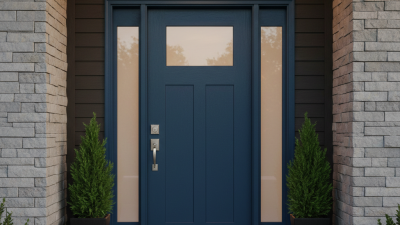
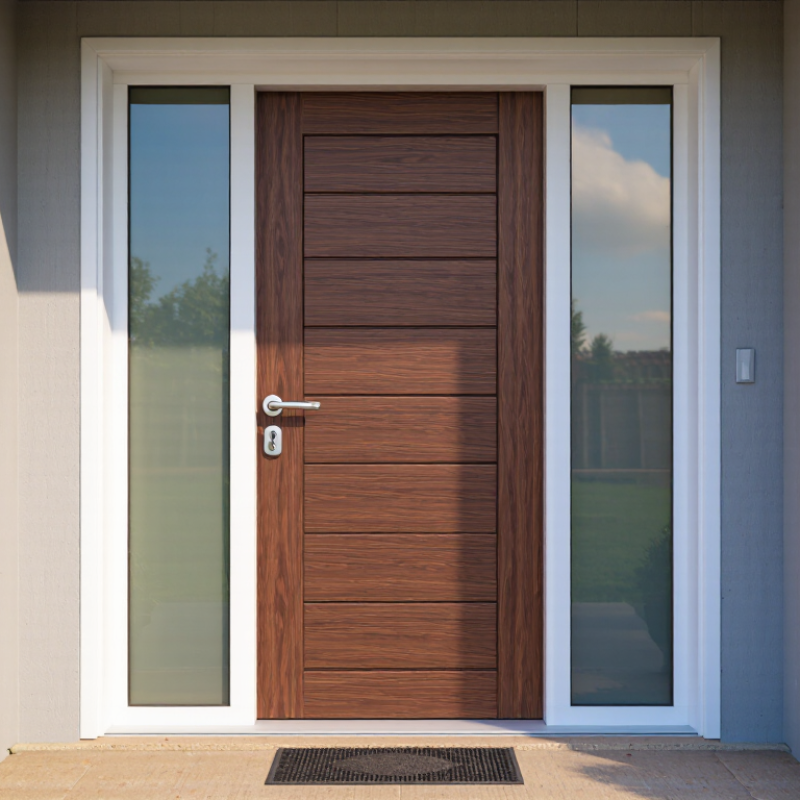
A fiberglass entry door is usually a layered assembly, not a solid slab of fiberglass. Thin FRP skins—fiber-reinforced polymer—form the visible faces and resist moisture and everyday impacts. Between them sits an insulated core, often polyurethane foam, which helps slow heat transfer. The surface may imitate painted wood grain, but the edge tells a more useful story: inspect the seals, corners, and threshold. Small gaps matter.
Frames complete the system. Depending on the design, they may use wood, composite material, or fiberglass, with weatherstripping and a sill managing drafts and water. The U.S. Energy Information Administration’s 2020 Residential Energy Consumption Survey reports that space heating accounts for about 42% of household energy use. That figure does not measure door losses, but it explains why whole-unit performance deserves attention. NFRC-certified ratings report a door’s U-factor for the complete product, rather than its insulated center alone. Compare ratings, then check installation details; a strong core cannot correct a poorly fitted frame. Even a careful inspection has limits. A door can look substantial and still leak around its jamb.
What Are Fiberglass Entry Doors?
Fiberglass entry doors typically use fiber-reinforced polymer (FRP) skins over an insulating foam core, fitted within a frame. This chart compares representative thermal-conductivity ranges for common door materials; lower values mean less heat conducts through the material. These are material properties, not whole-door performance ratings.
Bars show the midpoint of each typical range. Actual conductivity varies with material formulation, density, and temperature; a door’s overall performance also depends on its design, seals, glazing, and installation.
How a Typical 1¾-Inch Slab Combines Skins, Rails, Stiles, and Core
What Are Fiberglass Entry Doors?
How a Typical 1¾-Inch Slab Combines Skins, Rails, Stiles, and Core
A typical fiberglass entry slab is about 1¾ inches thick, or 44.5 millimeters. Two molded fiberglass skins form its faces. They wrap around a perimeter frame: vertical stiles at the sides and horizontal rails at the top and bottom. A reinforced lock block gives the latch and deadbolt a firmer anchoring point. Inside, a foam core fills much of the cavity and helps limit heat transfer. The exact layout varies. Some slabs use composite reinforcements, and not every manufacturer places them in the same locations.
The parts work together, but the core alone does not determine a door’s performance. The National Fenestration Rating Council rates complete products, so its certified U-factor reflects the tested assembly rather than an isolated slab. The U.S. Department of Energy also advises comparing insulated door materials and checking for tight weather seals; gaps around the frame can undermine an otherwise well-insulated core. Look closely at the hinge and lock edges. You may see denser inserts beneath the skin. That detail matters. A small caveat: ratings from one tested configuration do not guarantee identical results after installation, especially if the frame is out of square or the perimeter seal is uneven.
How NFRC U-Factor Ratings Measure Heat Transfer in Btu/(h·ft²·°F)
What Are Fiberglass Entry Doors?
How NFRC U-Factor Ratings Measure Heat Transfer in Btu/(h·ft²·°F)
A fiberglass entry door has a molded outer skin and an insulated core, often made with polyurethane foam. To compare its thermal performance, look at the National Fenestration Rating Council (NFRC) U-factor. This measures heat transfer through the door assembly: the lower the number, the less heat passes through under the same conditions. The units, Btu/(h·ft²·°F), describe heat flow per hour across each square foot for each degree of temperature difference. A hypothetical U-factor of 0.20 indicates less heat transfer than 0.30. It is not a promise of a specific energy bill.
NFRC ratings are based on standardized testing and can include the door, frame, and any glazing in the tested configuration. Check the label for the exact model and options; a large glass insert can change the result. The U.S. Department of Energy’s Energy Saver guidance estimates that windows account for about 25–30% of residential heating and cooling energy use. That figure concerns windows, not doors, but it illustrates why heat transfer through openings deserves attention. A low U-factor helps, yet installation gaps and worn weatherstripping can still let drafts in. The rating is useful, but not the whole story.
Tips: Compare U-factors for the same door configuration. Inspect the threshold and weatherstripping, too. A rating can’t fix a poor fit.
How ENERGY STAR Door Criteria Vary by Climate Zone and Glazing
What Are Fiberglass Entry Doors?
How ENERGY STAR Door Criteria Vary by Climate Zone and Glazing
Fiberglass entry doors resist dents and moisture, but the material alone does not make a door energy efficient. ENERGY STAR criteria depend on climate zone and whether the door has glazing. A mostly solid door usually loses less heat than a similar door with large glass panels. Still, a glazed door can qualify when its complete assembly meets the applicable limits.
In colder zones, look for a low U-factor, which indicates reduced heat transfer. In warmer zones, solar heat gain matters more; a lower solar heat gain coefficient can limit afternoon heat. Glazing type, glass area, frame, and seals all affect performance. Check the certified rating for your climate and the exact configuration, rather than judging by the fiberglass surface or a brochure claim. Installation matters, too. A small gap near the threshold can weaken the door’s performance. That detail is easy to miss.
Tips: Compare ratings for the exact glass configuration you plan to buy. For a west-facing entry, consider less glazing or a lower-SHGC option. Ask how the installer will seal the sill and frame. A beautiful door can still feel drafty.
How Fiberglass Compares with Steel and Wood in Durability and Upkeep
What Are Fiberglass Entry Doors?
How Fiberglass Compares with Steel and Wood in Durability and Upkeep
A fiberglass entry door usually has a molded outer skin and an insulated core. It resists moisture and will not rust, making it a practical choice for exposed porches. Its finish still needs occasional cleaning and inspection. A hard impact can crack the skin, and intense sun may fade the finish. Low maintenance does not mean no maintenance.
Steel doors offer a tough surface, but dents and scratches can expose metal to corrosion. Touch up damaged paint promptly.
Wood has a warm, natural appearance, but moisture can make it swell or shrink. The USDA Forest Products Laboratory’s Wood Handbook places wood’s fiber saturation point around 30% moisture content; below that point, changing moisture levels can cause dimensional movement. Proper sealing helps, but needs upkeep.
The 2024 Cost vs. Value report estimated a 100% cost recoup for a steel entry-door replacement in its national average. That figure reflects resale estimates, not durability or maintenance. Installation, weather exposure, and finish quality still matter.
A small caveat, but an important one.