China Top 10 Wall Cladding Manufacturers for Global Buyers explores a market shaped by energy efficiency, design flexibility, and stricter building performance expectations. The United Nations Environment Programme reported that buildings and construction consumed 34% of global energy and produced 37% of energy and process-related carbon emissions in 2022. These figures make the building envelope more important than a decorative surface. Wall Cladding can influence thermal comfort, moisture control, fire performance, and long-term maintenance.
Market research firms, including Grand View Research and Fortune Business Insights, continue to report steady growth across facade, siding, and exterior wall system categories. However, their market boundaries differ. Some include insulation and rainscreen assemblies, while others count only visible panels. The numbers are useful, but not perfectly comparable. Buyers should look beyond impressive forecasts.
This guide evaluates ten Chinese manufacturers through practical sourcing criteria. These include material consistency, production capacity, testing documentation, export experience, customization, and after-sales communication. A factory sample may look excellent under showroom lighting. The real test is often a corner detail, a coating batch, or a delayed replacement panel. Certifications also require careful review. Standards such as ASTM E283, ASTM E331, EN 13501-1, and project-specific fire requirements may apply differently by country and building type. No ranking is flawless. Supplier performance can change with management, materials, and workload. Global buyers should verify current certificates, inspect samples, clarify tolerances, and request references from comparable projects before signing a contract.
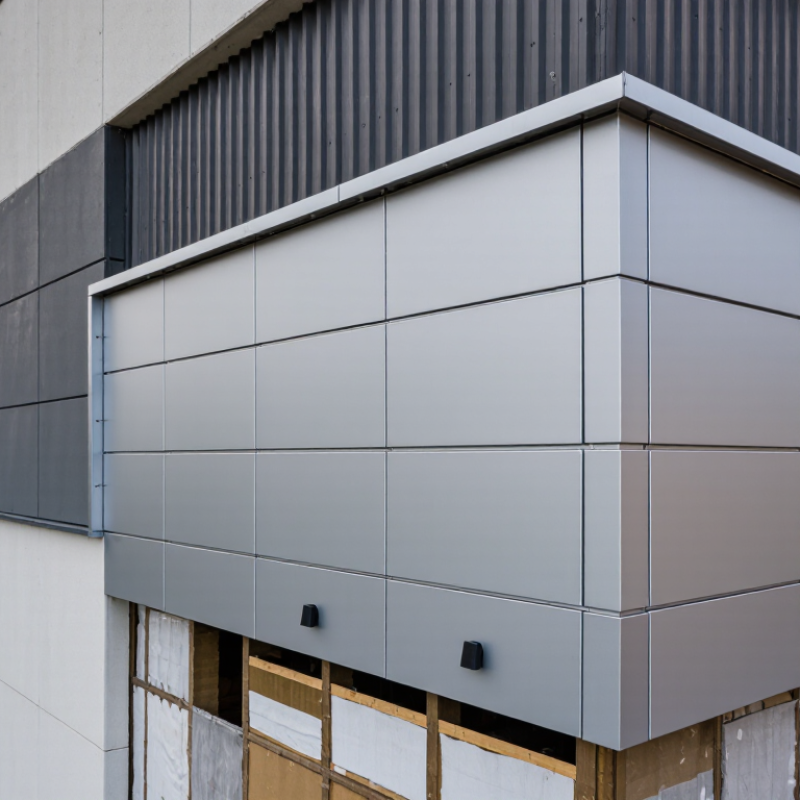
Wall cladding protects building surfaces and shapes their visual character. Common types include panels, rainscreen systems, tiles, siding, and ventilated façades. Each type suits different installation methods, climates, and maintenance plans.
Materials include aluminum, steel, fiber cement, natural stone, terracotta, wood, and recycled composites. Aluminum is lightweight and resists corrosion. Fiber cement offers a textured appearance with strong weather performance. Stone creates a premium finish but adds structural load. Wood feels warm, yet it needs careful sealing and regular inspection. In coastal areas, salty air can expose weak coatings quickly. That detail is easy to overlook.
Applications range from homes and offices to hospitals, warehouses, and transport facilities. Rainscreen cladding can help manage moisture behind the outer layer. Insulated panels may improve thermal performance in large buildings. However, results depend on joints, drainage, fasteners, and local installation quality. A good material can still fail when detailing is rushed. I have found that attractive samples sometimes hide difficult maintenance requirements.
Tips: Request full material specifications, coating details, fire-test documents, and installation drawings. Check panel thickness, impact resistance, color consistency, and warranty conditions. Ask how the system performs in your climate. Test a sample under real light before approving large quantities. Also, confirm compatible trims and replacement procedures. Cheap accessories often create expensive problems.

Selecting China’s top 10 wall cladding manufacturers requires more than online rankings or polished factory photos. The comparison begins with verified production experience, material knowledge, and export reliability. We review factory age, annual capacity, project references, and in-house quality controls. Sample panels are checked for thickness, coating consistency, edge accuracy, color stability, and installation fit. A factory may quote well but perform poorly under repeat orders. That risk matters.
The final ten are compared through technical evidence, not advertising claims. We examine aluminum, fiber cement, steel, stone veneer, and composite systems. Key factors include fire performance, weather resistance, thermal movement, drainage design, and maintenance needs. Test reports must show issuing laboratories, dates, product scope, and traceable batch information. We also compare minimum order quantities, tooling charges, packaging, lead times, spare parts, and after-sales response. Price is only one line in the spreadsheet. Frankly, scoring can still miss factory culture or a rushed inspection. Rankings should support judgment, not replace it.
Tips: Request identical sample sizes and written specifications from every shortlisted supplier. Visit the plant when possible, and observe how workers record defects. Ask for recent production videos, packing photos, and realistic delivery schedules. Keep a small contingency budget. It helps when assumptions prove wrong.
China’s Top 10 Wall Cladding Manufacturers for Global Buyers deserve evaluation beyond factory size and attractive catalogs. Grand View Research estimates that the global wall cladding market will continue expanding through 2030, supported by urban construction, renovation, and energy-efficiency requirements. Asia-Pacific remains a major demand center. This supports China’s strong manufacturing position, but it does not guarantee consistent quality.
A practical top-ten review should compare aluminum panels, fiber cement boards, ceramic systems, and insulated facade products. Buyers should inspect coating thickness, fire-test reports, water absorption, impact resistance, and dimensional tolerance. ISO 9001 certification helps, but production records and independent laboratory testing matter more. The International Energy Agency reports that buildings account for about 30% of global energy demand, making thermal performance increasingly important. Check the actual U-value, not only marketing language.
Export experience also affects the ranking. Reliable manufacturers provide English technical drawings, packing photos, installation guidance, and traceable batch information. Customs documents should match the shipped products. Small details matter. Lead times need written confirmation. A factory visit or pre-shipment inspection can reveal uneven finishes, weak corner protection, or poor pallet loading. My assessment remains imperfect: published market reports use different product definitions, while some manufacturers disclose limited capacity data. Global buyers should therefore treat any top-ten list as a starting point, then verify samples, references, compliance documents, and after-sales response for the target market.
Representative nominal panel thicknesses commonly used in international wall-cladding procurement. Actual specifications vary by product design, structural requirements, fire rating, and local building codes.
The comparison focuses on widely traded cladding formats rather than individual companies or brands, helping global buyers understand typical material specifications when evaluating suppliers.
China Top 10 Wall Cladding Manufacturers for Global Buyers
Product quality should be verified beyond glossy samples. Ask for batch records, coating thickness, color tolerance, and water absorption results. ISO’s 2023 Survey recorded over 1.26 million ISO 9001 certificates worldwide, yet certification alone does not guarantee consistent panels. Factory audits should inspect testing equipment, incoming materials, and final packaging. Small defects often appear after long-distance shipping.
Customization is another practical test. Reliable manufacturers should provide CAD drawings, sample panels, fire-rated options, and matching accessories. Confirm minimum order quantities, tooling fees, and color repeatability before signing. For regional compliance, check documents such as EN 13501-1, ASTM E84, or local wind-load reports. Requirements vary by project. Do not assume one certificate works everywhere.
Tips: Request three production samples from different batches. Compare dimensions, gloss, edges, and fixing points. Ask for monthly capacity, current utilization, and realistic lead times, not only maximum output. A factory claiming huge capacity may still miss deadlines during peak seasons. This is where many purchasing plans become overly optimistic. Review inspection photos, test dates, and corrective-action records. Independent pre-shipment inspection adds cost, but it can expose packaging or surface problems before loading.
| Rank | Manufacturer Profile | Primary Wall-Cladding Products | Typical Materials & Thickness | Customization Capability | Common Certifications & Standards | Indicative Annual Capacity | Quality-Control Strengths | Typical Export Suitability |
|---|---|---|---|---|---|---|---|---|
| 1 | Profile A — Aluminum Façade Specialist | Aluminum composite panels, solid aluminum panels, perforated screens, column covers | Aluminum alloy 3003/5005; 2–6 mm panel thickness; 0.21–0.50 mm coil skin options | High: color matching, CNC routing, perforation, curved panels, project-specific cassette systems | ISO 9001; EN 13501-1; ASTM E84; AAMA 2605; CE-related project documentation where applicable | Approximately 1–3 million m²/year | Coating thickness, color difference, peel strength, flatness, impact, and fire-performance checks | Suitable for commercial façades, retail buildings, airports, and high-volume overseas projects |
| 2 | Profile B — Fiber Cement Board Producer | Fiber cement façade boards, rainscreen panels, soffit boards, textured exterior sheets | Cement, cellulose fiber, mineral fillers; commonly 6–12 mm thickness | Medium to high: cut-to-size, grooves, textures, factory coatings, edge treatment, private-label packaging | ISO 9001; EN 12467; EN 13501-1; ASTM C1186; ASTM E84 where tested | Approximately 2–6 million m²/year | Density, moisture movement, bending strength, dimensional tolerance, freeze-thaw, and water absorption testing | Well suited to residential, institutional, and ventilated-rainscreen applications |
| 3 | Profile C — Ceramic and Terracotta Façade Manufacturer | Terracotta baguettes, ceramic rainscreen panels, louvers, sun-shading elements | Fired clay and ceramic materials; panel depths commonly 20–50 mm; custom profiles available | High: custom extrusion, glaze, color, profile, perforation, modular length, and support-system design | ISO 9001; EN 14411; EN 13501-1; ASTM C126 where specified; project-specific wind-load testing | Approximately 100,000–500,000 m²/year | Firing-temperature control, water absorption, freeze-thaw, color consistency, dimensional accuracy, and visual inspection | Best for premium façades, cultural buildings, hotels, and architect-led projects |
| 4 | Profile D — HPL Exterior Panel Manufacturer | Exterior high-pressure laminate panels, compact façade sheets, balcony and soffit panels | Resin-impregnated kraft paper and decorative overlays; generally 6–12 mm thickness | High: wood, stone, solid colors, digital décor, CNC machining, pre-drilling, and panel nesting | ISO 9001; EN 438; EN 13501-1; ASTM E84; ISO 14001 commonly available at qualified plants | Approximately 500,000–1.5 million m²/year | Surface wear, UV resistance, dimensional stability, impact, moisture resistance, and color consistency | Suitable for schools, offices, residential façades, balconies, and ventilated cladding systems |
| 5 | Profile E — Stone and Porcelain Panel Supplier | Sintered stone panels, porcelain slabs, natural-stone rainscreen panels, ventilated façade tiles | Porcelain, sintered stone, granite, marble, and limestone; commonly 6–20 mm thickness | Medium to high: slab cutting, CNC edges, anchor preparation, waterjet patterns, and matched layouts | ISO 9001; EN 14411; ASTM C373; ASTM C880 for stone where applicable; EN 13501-1 project testing | Approximately 200,000–800,000 m²/year | Water absorption, breaking strength, slip and surface checks, shade sorting, warpage, and anchor-pull verification | Appropriate for luxury residential, hospitality, commercial, and monumental façades |
| 6 | Profile F — Glass Façade and Spandrel Panel Fabricator | Insulated glass units, ceramic-frit glass, laminated glass, spandrel panels, glass fins | Heat-treated, laminated, insulated, and coated glass; typical glass thickness 6–32 mm total build-up | High: frit patterns, coatings, sizes, edgework, holes, laminates, and façade-system integration | ISO 9001; EN 12150; EN 14449; EN 1279; ASTM C1048; ASTM C1172 where applicable | Approximately 300,000–1.2 million m²/year | Optical quality, heat-soak testing, seal integrity, coating inspection, fragmentation, and gas-fill verification | Suitable for curtain walls, skylights, retail façades, and high-performance building envelopes |
| 7 | Profile G — Steel and Weather-Resistant Cladding Producer | Insulated sandwich panels, corrugated sheets, standing-seam systems, weathering-steel panels | Galvanized steel, aluminum-zinc steel, stainless steel, or weathering steel; 0.45–1.2 mm skins | Medium to high: profile geometry, coating, panel length, insulation core, flashings, and accessories | ISO 9001; EN 14509; EN 14782; EN 13501-1; ASTM A792/A653 for relevant steel products | Approximately 1–5 million m²/year | Steel thickness, coating mass, adhesion, thermal performance, fire reaction, joint fit, and dimensional checks | Strong option for warehouses, industrial buildings, logistics centers, and large-scale developments |
| 8 | Profile H — PVC and ASA Exterior Siding Manufacturer | PVC siding, ASA co-extruded panels, soffits, trim profiles, and lightweight exterior boards | Rigid PVC, ASA/PVC co-extrusion, and impact-modified polymer compounds; 0.8–3.0 mm skin or profile wall | High: profile design, embossed finishes, colors, woodgrain décor, lengths, trims, and packaging | ISO 9001; EN 13245; EN 13501-1; ASTM D3679; ASTM E84 where tested | Approximately 3–10 million linear meters/year | Color retention, impact strength, dimensional stability, weathering, profile geometry, and extrusion consistency | Suitable for low-rise housing, renovation, modular buildings, and cost-sensitive projects |
| 9 | Profile I — Wood-Plastic Composite Exterior Panel Producer | WPC wall panels, co-extruded decking-style cladding, slatted screens, and exterior ceiling systems | Wood fiber with HDPE, PVC, or PP polymer matrix; commonly 12–30 mm board or profile depth | High: hollow or solid profiles, surface embossing, colors, lengths, clips, trims, and private-label cartons | ISO 9001; ASTM D7031; ASTM D7032 for relevant applications; EN 15534; fire testing by project requirement | Approximately 500,000–2 million m²/year | Water absorption, flexural strength, creep, slip, color stability, thermal expansion, and batch consistency | Suitable for hospitality, balconies, garden buildings, façades, and decorative screening |
| 10 | Profile J — Mineral Wool and Insulated Façade Systems Supplier | Mineral wool insulated panels, external thermal-insulation systems, façade boards, and accessory profiles | Stone wool, glass wool, cement render, fiberglass mesh, and aluminum or PVC accessories; 40–200 mm insulation thickness | Medium: density selection, board size, facing, render texture, color, system accessories, and project details | ISO 9001; EN 13162; EN 13500; EN 13501-1; ASTM C612; ASTM E136 where applicable | Approximately 200,000–1 million m²/year | Thermal conductivity, density, compressive strength, water repellency, fire resistance, and system adhesion testing | Suitable for energy-efficient renovations, high-rise façades, fire-conscious designs, and insulated envelope projects |
Note: The profiles above are anonymized industry categories rather than named companies. Production capacities are indicative ranges commonly associated with established Chinese manufacturers and should be verified through current factory audits, certificates, test reports, and project-specific quotations.
China’s leading wall cladding manufacturers often provide more than factory pricing. Reliable suppliers can prepare samples, technical drawings, packing plans, and export documents. They should confirm HS codes, Incoterms, minimum order quantities, and production lead times in writing. Ask whether they arrange pre-shipment inspections or work with an independent inspection agency. Small details matter, such as corner protection, moisture barriers, and pallet labeling.
Pricing depends on more than the panel itself. Material grade, surface coating, thickness, dimensions, accessories, tooling, and order volume all affect the final cost. Freight can change sharply by season and destination port. Duties, inland delivery, insurance, and installation hardware should appear in the landed-cost calculation. A low quote may exclude essential items. That mistake is common.
A practical buyer checklist should include factory experience, export references, product test reports, and warranty terms. Request a physical sample, not only digital images. Check color consistency under natural light. Review tolerance data, fire-performance documentation, and packaging photographs. Confirm how defects are handled and how quickly replacement parts can ship. Video audits can help, but they are not a complete inspection. I have found that clear drawings prevent more disputes than friendly promises. Allow extra time for approval; production schedules sometimes slip. Compare at least three written quotations with identical specifications before selecting a supplier.

5960 Odana Road
Madison, WI 53719
T: 608.442.0032
1001 Frank H Street
Waunakee, WI 53597
T: 608-268-7140