China Top 10 Entrance Front Door Manufacturers
An Entrance Front Door is more than a finishing detail. It faces rain, dust, temperature changes, and daily use, while shaping a building’s first impression. For homeowners, developers, and importers, choosing a manufacturer means comparing materials, insulation, finishes, hardware, customization, and after-sales support. Small details matter: a poorly fitted threshold can admit drafts, while a heavy door needs dependable hinges and careful installation.
Performance is increasingly important. The 2024 Global Status Report for Buildings and Construction, published by the UN Environment Programme and the Global Alliance for Buildings and Construction, states that buildings accounted for 32% of global energy use and 34% of energy-related CO₂ emissions in 2022. That context makes thermal performance and durable construction relevant purchasing considerations, not just sales claims. Buyers should request test results and product specifications, then check that they match the intended climate and building conditions.
This article introduces ten notable China-based entrance front door manufacturers and offers a practical starting point for comparison. The selection is not a universal ranking: project requirements, export experience, lead times, and available certifications can differ. Supplier catalogs can also change. Check current documentation directly, and ask specific questions about core materials, surface treatment, hardware, packaging, and warranty terms. A polished showroom sample helps, but it cannot tell the whole story. That is worth remembering.
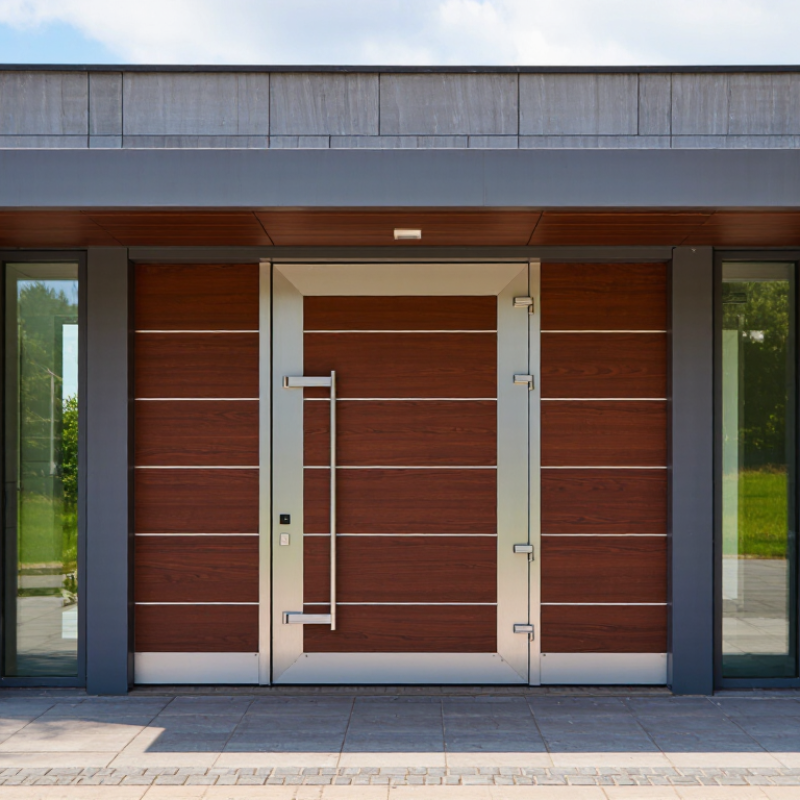
China’s Entrance Front Door Manufacturing Industry at a Glance
China’s entrance front door manufacturing industry brings together metalworking, surface finishing, hardware sourcing, and custom production. Factories may offer steel, aluminum, or engineered wood doors, with options such as glazed panels, insulated cores, and different finishes. Capabilities vary widely. Some suppliers focus on large production runs, while others handle smaller projects with tailored dimensions.
A dependable assessment goes beyond catalog images. Ask how the door frame is measured, what testing supports performance claims, and how finish quality is checked. Request drawings, material specifications, and clear packaging details before placing an order. For projects exposed to rain, heat, or heavy daily use, discuss suitable materials and maintenance needs. Standards differ by destination, so confirm applicable requirements with qualified local professionals. A polished catalog is not the whole story.
Tips: Share the opening dimensions, wall details, and intended use early. Ask for a sample finish and inspect hinges, seals, and locking points. Keep written approval records. Small details matter. I have seen a minor measurement assumption create avoidable delays, and it is easy to overlook this when comparing prices.
China Top 10 Entrance Front Door Manufacturers
China’s Entrance Front Door Manufacturing Industry at a Glance
Crude steel production provides a broad view of an important material supply base for metal door manufacturing; it is not a measure of entrance-door output or manufacturer rankings. Production figures are in million tonnes. Source: National Bureau of Statistics of China.
Common Front Door Types, Materials, and Performance Features
Entrance doors commonly come in panel, flush, and glazed designs. Panel doors suit traditional facades, while flush doors create a clean, simple appearance. Narrow glass inserts bring daylight into a dim hallway, but they reduce privacy unless textured or carefully positioned. For a busy home, check the swing direction, nearby furniture, and threshold clearance. Small details matter.
Steel doors resist impact and often provide good security, though damaged coatings can expose edges to dents or corrosion. Fiberglass handles moisture well and can imitate wood grain, but surface quality varies. Solid timber feels warm and can be repaired, yet it needs proper sealing and periodic care. Aluminum is light and corrosion-resistant; a thermally broken frame can help limit heat transfer. Ask for documented air, water, and thermal test results for the complete door assembly, not just the door panel. A good lock cannot fix a poorly fitted frame.
Tips: Measure the opening at several points. Confirm wall thickness, sill height, and local climate before ordering. Inspect joints, seals, hinges, and finish samples. Test the sample. I would not choose by weight alone; installation quality is easy to overlook, and even a strong door can leak around its edges.
How to Assess and Compare Chinese Door Manufacturers
Comparing Chinese entrance door manufacturers takes more than reviewing product photos. Ask for technical drawings, material specifications, and test reports for the exact model you plan to order. Check door-leaf thickness, core construction, frame material, finish, and hardware. Details matter. A sample corner can reveal uneven coating, rough welds, or weak edge protection that a catalog image may hide.
Compare suppliers using the same written requirements. Request production timelines, minimum order quantities, packaging details, and warranty terms in clear language. Ask how each factory checks dimensions and finish before shipment, and whether inspection records are available.
A video call can show the production floor, but it cannot replace independent quality checks. Be cautious when answers stay vague or specifications change between documents.
A low quote may reflect thinner materials or excluded hardware, though price alone proves little. I would not rely on polished brochures alone. Keep a small comparison sheet, note unanswered questions, and revisit assumptions before placing a large order.
Profiles of 10 Leading Entrance Front Door Manufacturers in China
This guide profiles ten leading entrance door manufacturers in China by their production strengths, rather than by brand claims. The profiles cover high-volume steel door makers, solid-wood specialists, aluminum fabricators, and producers combining metal frames with wood finishes. Other profiles focus on custom dimensions, acoustic seals, thermal performance, smart-lock preparation, design flexibility, or project-scale supply. These differences matter at the showroom: compare frame thickness, corner joins, gasket fit, and finish consistency, not just a glossy sample.
The National Bureau of Statistics reported that China completed 998.31 million square meters of building floor space in 2023, up 17.0% year on year. This figure provides housing context, but it does not measure entrance-door sales or identify which manufacturers performed best.
A careful profile should therefore distinguish verified factory capabilities from sales language. Ask for product test records, production capacity, installation details, and packaging specifications. Small checks help. Still, a catalog cannot show how a door performs after years of use. That is a limitation worth keeping in view.
Key Factors for Choosing a Manufacturer for Your Project
Choosing an entrance door manufacturer in China requires more than comparing catalog prices. Start with the project’s climate, building use, opening size, and required security level. Ask which materials and finishes suit those conditions, and request written specifications for frame thickness, hardware, seals, and glass. Confirm how measurements, sample approval, production updates, and after-sales issues will be handled. Clear answers matter. A low quote is difficult to assess if important components are excluded.
Tips: Request a sample or detailed product drawings before approving production. Compare quotations line by line, including packaging, delivery terms, and replacement parts. Ask for recent project references and evidence of quality checks. If practical, arrange a factory visit or independent inspection. Check the actual finish under natural light; photographs can hide color differences.
A reliable supplier should explain its process without making vague promises. I have learned that polished samples do not always reveal how consistently a full order will be made. Ask how defects are recorded and resolved, and who pays if approved dimensions are not met. Keep decisions in writing, especially changes to handles, hinges, or surface color. Some details get missed. Measure twice.