Selecting the Top 10 Aluminum Composite Panel suppliers worldwide requires more than comparing product prices. Panel quality depends on core composition, coating performance, flatness, fire behavior, and production consistency. These details influence how a façade performs under sunlight, rain, wind, and daily temperature changes.
This introduction sets a practical framework for evaluating leading manufacturers and distributors. It considers product range, technical documentation, factory experience, quality control, certifications, delivery capability, and after-sales support. Project evidence also matters. A supplier with panels installed on airports, retail centers, or high-rise façades may offer stronger practical insight than one relying only on polished brochures.
Performance data should be checked carefully. Buyers can request coating specifications, test reports, warranty terms, and sample panels before making a decision. Small details matter, such as protective film adhesion, color consistency between batches, and clean edge finishing. They often become visible only after installation.
Not every supplier serves every market equally well. Some excel in fire-rated systems, while others focus on decorative finishes, signage, or economical building envelopes. Rankings may change as factories expand, certifications expire, or regional logistics shift. Public information is not always complete.
That limitation deserves attention. A confident website does not replace independent verification. This guide therefore presents a balanced starting point, not an unquestionable verdict. It helps architects, contractors, façade specialists, and importers compare suppliers with clearer expectations and more practical judgment.
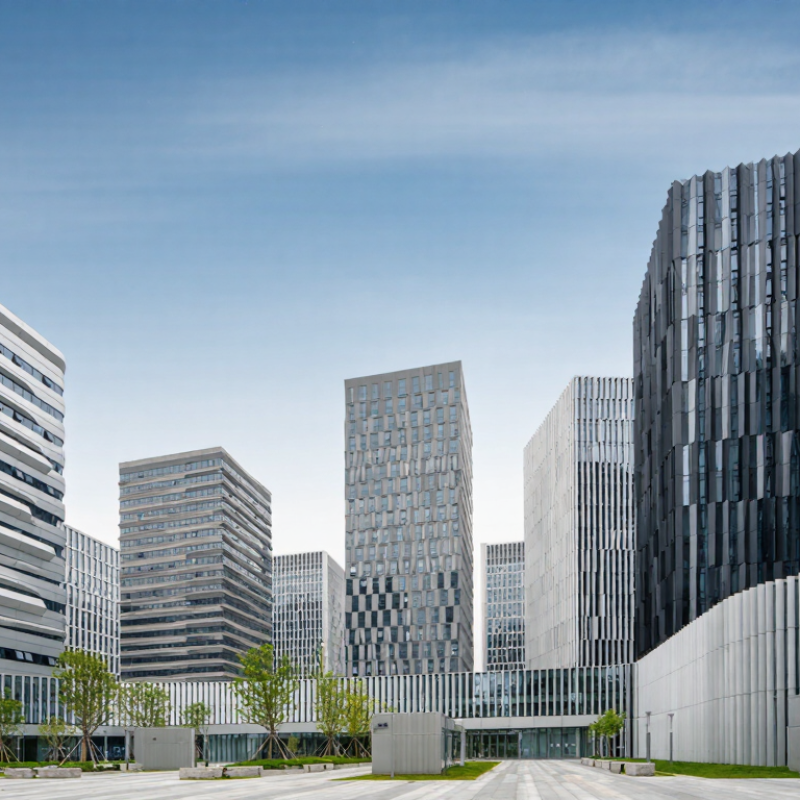
Aluminum composite panels are lightweight sandwich panels made from two thin aluminum sheets and a central core. The core may contain polyethylene, mineral material, or a fire-retardant formulation. This structure offers a practical balance between rigidity, weight, and surface quality. It also allows panels to cover large facade areas with fewer visible joints.
Their uses are broad. Architects install them on commercial facades, entrance canopies, column covers, and interior wall systems. Signage manufacturers value their smooth surface and easy routing. They also appear in shop interiors, transport facilities, and equipment enclosures. According to Grand View Research, the global aluminum composite panels market was valued at several billion US dollars in recent years, with construction remaining the dominant application. MarketsandMarkets also identifies facade renovation and new commercial construction as important demand drivers.
Performance depends heavily on the core and installation method. A panel is not automatically fire-safe. Project teams should check reaction-to-fire classifications, tested assemblies, wind loads, drainage, and joint details. EN 13501-1 and ASTM E84 are commonly referenced, but their results are not interchangeable. Published market estimates vary because researchers define products and regions differently. That is worth questioning. In practical inspections, poor edges and loose fixings often create greater problems than the panel surface itself. The material looks simple. The system is not.

Aluminum composite panels are lightweight sandwich panels made from two aluminum sheets bonded to a polymer or mineral-filled core. The chart shows representative panel thicknesses commonly specified for major applications; values are typical industry specifications rather than supplier rankings or market-share data.
Thinner panels are often used for signage, interior finishes, and retail displays, while 4 mm panels are frequently selected for exterior façades and applications requiring greater rigidity.
To select the top 10 global aluminum composite panel suppliers, we used a transparent, evidence-based framework. Company names were reviewed through production capacity, export coverage, product testing, certifications, technical documents, and completed project experience. Grand View Research estimated the global aluminum composite panels market at about USD 6.8 billion in 2023, with continued growth expected through the decade. Fortune Business Insights reported different market values, reminding us that research methods can change results.
Quality evidence carried the greatest weight. We examined fire-performance reports, coating durability, core composition, thickness tolerance, and warranty conditions. ISO 9001 certification supported the assessment, but it was not treated as proof of product quality alone. Suppliers also needed dependable delivery records and responsive technical support. Public information was incomplete in some markets. That limitation deserves attention.
Tips: Buyers should request recent test reports, not old certificates. Compare identical panel specifications. Check coating thickness, fire classification, and installation guidance. Ask for regional references. A large factory does not automatically mean better panels. Confirm whether laboratory results match the exact product being offered. Claims without traceable documents received lower scores.
Top 10 Aluminum Composite Panel Suppliers Worldwide?
Profiles of the Top 10 Aluminum Composite Panel Suppliers
The leading supplier profiles differ by strength, not slogans. Profile one serves large façade projects with automated coating lines. Profile two focuses on fire-rated mineral cores. Profile three supplies lightweight panels for renovations. Profile four specializes in strict color matching. Profile five supports transport interiors with impact-resistant sheets. Profile six offers recycled aluminum content. Profile seven maintains short regional delivery routes. Profile eight produces custom widths for signage. Profile nine serves humid coastal markets with enhanced coatings. Profile ten combines technical design support with documented testing. These profiles reflect practical purchasing needs.
Grand View Research estimates the global aluminum composite panel market could grow at over 6% annually through 2030. Its analysis highlights construction, renovation, and energy-efficient façades as major demand drivers. Fire performance remains critical. The 2024 global building-materials outlook from Fortune Business Insights also points to stronger demand for safer, durable envelope systems. Yet supplier claims still require checking. Some technical sheets are incomplete.
Tips: Request full test reports, coating specifications, core density, and warranty terms. Confirm whether results apply to the exact panel thickness. Ask for sample panels. Inspect the edges, gloss uniformity, and protective film. A low price can hide longer lead times or inconsistent batches. I would also compare independent certifications, because one brochure never proves long-term performance. Supplier rankings should remain flexible. Project location changes the answer.
| Rank | Supplier Profile | Primary Region | Core Panel Types | Typical Panel Thickness | Standard Widths | Fire-Performance Options | Common Surface Finishes | Typical Applications | Export Coverage |
|---|---|---|---|---|---|---|---|---|---|
| 1 | Supplier Profile A | East Asia | PE, FR, and mineral-core panels | 3–6 mm | 1,220–1,575 mm | Standard and enhanced fire-retardant grades | PVDF, FEVE, anodized, brushed, mirror | Curtain walls, façades, signage, canopies | Asia, Europe, Middle East, Africa |
| 2 | Supplier Profile B | Western Europe | FR, A2, and recycled-aluminum panels | 3–4 mm | 1,000–1,500 mm | A2 and B-s1,d0 options available | PVDF, powder coating, anodized, wood effect | High-rise façades, renovation, soffits | Europe, North America, Middle East |
| 3 | Supplier Profile C | North America | FR, PE, and custom fabrication panels | 3–6 mm | 1,220–1,575 mm | Class A and project-specific fire grades | Kynar-type coatings, solid, metallic, custom colors | Commercial buildings, retail, transport facilities | North America, Latin America, Caribbean |
| 4 | Supplier Profile D | South Asia | PE, FR, and antibacterial panels | 3–5 mm | 1,220–1,575 mm | FR grades for exterior and interior use | PE, PVDF, matte, gloss, stone and timber patterns | Residential façades, interiors, signage | South Asia, Africa, Gulf countries |
| 5 | Supplier Profile E | Middle East | FR, A2, and weather-resistant panels | 4–6 mm | 1,220–1,575 mm | A2, B1, and project-tested systems | PVDF, high-gloss, metallic, granite effect | Hotels, airports, towers, commercial façades | Gulf region, Africa, Central Asia |
| 6 | Supplier Profile F | Southeast Asia | PE, FR, and lightweight honeycomb panels | 3–10 mm | 1,000–1,575 mm | FR and low-smoke interior grades | Anodized, brushed, wood grain, custom printed | Interior partitions, façades, marine fit-outs | ASEAN, Australia, Oceania |
| 7 | Supplier Profile G | Eastern Europe | FR, A2, and ventilated-façade panels | 3–4 mm | 1,000–1,500 mm | European reaction-to-fire classifications | PVDF, powder-coated, anodized, mineral textures | Ventilated façades, institutional buildings, retrofits | Europe, Caucasus, Central Asia |
| 8 | Supplier Profile H | Oceania | FR, marine-grade, and coastal-use panels | 3–6 mm | 1,220–1,575 mm | Non-combustible and low-flame-spread options | PVDF, marine coatings, anodized, satin finishes | Coastal façades, retail, public infrastructure | Australia, New Zealand, Pacific markets |
| 9 | Supplier Profile I | Latin America | PE, FR, and digitally printed panels | 3–5 mm | 1,220–1,575 mm | FR grades for commercial and institutional projects | PVDF, PE, solid colors, wood and stone effects | Retail stores, hospitals, offices, signage | Latin America, North America, Caribbean |
| 10 | Supplier Profile J | Africa | PE, FR, and exterior-grade panels | 3–6 mm | 1,220–1,575 mm | FR and weather-resistant specifications | PVDF, matte, gloss, metallic, textured finishes | Commercial façades, residential buildings, signage | Africa, Middle East, Indian Ocean markets |
Comparing the top aluminum composite panel suppliers requires more than checking a glossy catalog. A dependable supplier should show documented core composition, coating performance, fire-test results, and production tolerances. Ask for current certificates, not screenshots from an old project. In practice, experienced buyers also inspect sample edges, surface flatness, and protective film adhesion. Small details matter.
Leading suppliers usually differ in technical support, customization, and delivery discipline. One may offer broader panel thicknesses, while another handles curved fabrication more consistently. A stronger supplier can explain how humidity, coastal salt, temperature changes, and installation methods affect panel life. Their engineers should provide clear cutting guidance, joint recommendations, and compatible accessory specifications. Reliable communication is measurable: quotation revisions are dated, packing lists are accurate, and damaged panels follow a defined process.
Price still matters, but the lowest quotation can hide thinner skins, weaker coatings, or costly replacement delays. Request matched samples and compare color, weight, rigidity, and finish under natural light. Review references from similar building types, especially projects exposed to strong sun or heavy rain. No supplier is perfect. A missed tolerance or vague warranty clause may reveal more than polished sales language. Warranty terms should clearly identify coating limits, installation responsibilities, and response times.
Choosing an aluminum composite panel supplier requires more than comparing prices. Ask for current test reports covering fire performance, peel strength, coating durability, and dimensional tolerance. Check the core. A panel may look identical from the front, yet its core composition can affect safety, machining, and long-term stability. Request physical samples with stated thicknesses, finishes, and batch numbers.
Reliable suppliers explain their production controls clearly. They should identify aluminum skin thickness, coating system, color variation limits, and quality inspection points. Visit a factory when possible, or request production videos and independent inspection records. A well-prepared supplier can also provide installation guidance, cutting recommendations, packaging details, and realistic lead times. Do not ignore logistics. Damaged corners, wet cartons, or poor pallet protection can erase apparent savings.
Experience shows that communication often predicts project performance. Ask how complaints are recorded and how replacement panels are handled. Request references from projects with similar climate, building height, and installation method. A long warranty means little without traceability and written conditions. I have seen attractive quotations omit testing scope, freight risks, or minimum order quantities. That gap matters. Buyers should compare complete delivered costs, not only the panel price. Trust grows through consistent documents, honest limitations, and answers that remain clear after several technical questions. Mistakes still happen, so choose a supplier that admits them early and corrects them with evidence.

5960 Odana Road
Madison, WI 53719
T: 608.442.0032
1001 Frank H Street
Waunakee, WI 53597
T: 608-268-7140