What Is a Stainless Steel Water Bottle?
A Stainless Steel Water Bottle is a reusable container made primarily from corrosion-resistant steel. Its chromium content helps form a thin protective layer when exposed to air. That layer limits rust and gives the bottle its familiar polished or brushed surface.
Harry Brearley, the British metallurgist linked to early stainless-steel development, reportedly called his invention “rustless steel.” The phrase was simple, but not completely accurate. Stainless steel can stain, scratch, or corrode under harsh conditions. That matters when choosing a bottle.
Many bottles use 18/8 stainless steel, commonly known as Type 304. Some use Type 316, which offers stronger resistance to chlorides and salty environments. The grade is important, but it is only one part of the product. The lid, gasket, welds, inner coating, and manufacturing quality also affect performance.
A good bottle feels balanced in the hand. Its mouth should be wide enough for cleaning, ice, and inspection. The inner wall should have no sharp seams or unusual odors. Insulated models usually contain a double-wall structure, creating a vacuum that slows heat transfer. Cold water stays cold longer. Hot drinks remain warm.
Still, “safe” should not become a careless promise. Food-contact suitability depends on materials, construction, cleaning, and proper use. A damaged seal may harbor residue. Strong odors can signal poor cleaning, not necessarily dangerous steel.
This guide examines the material, grades, insulation, hygiene, durability, and practical limits of a Stainless Steel Water Bottle. It also questions a common assumption: reusable does not automatically mean maintenance-free.
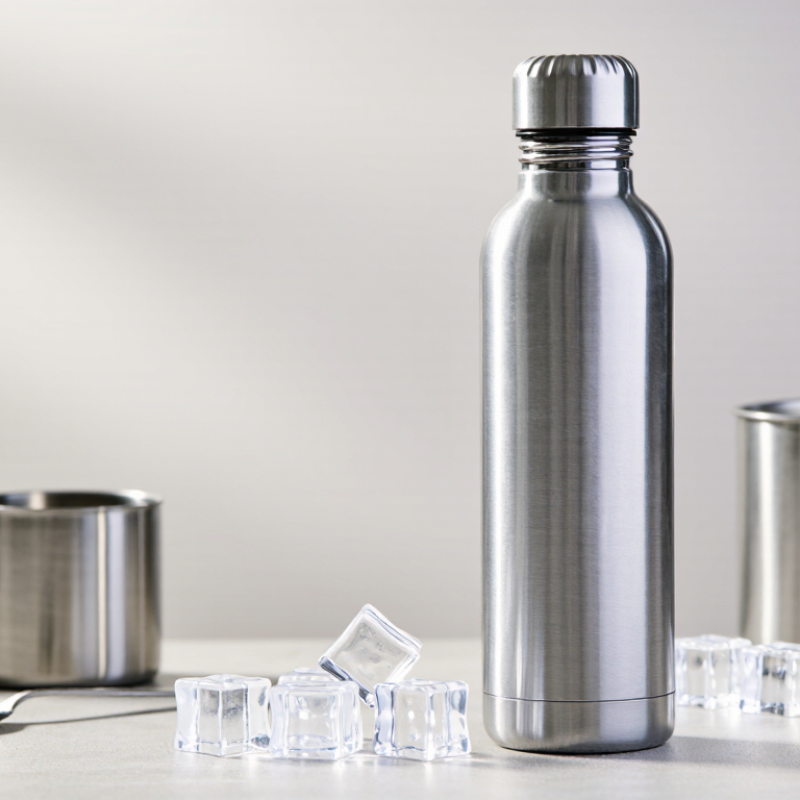
A stainless steel water bottle is a reusable container designed to hold drinking water and other common beverages. Its main body is made from corrosion-resistant stainless steel, often selected for food-contact use. Unlike disposable plastic containers, it is built for repeated washing and daily carrying. The structure starts with the bottle wall, which gives the container strength and shape. A narrow neck reduces spills, while the mouth allows filling, pouring, and cleaning. Some openings are wide enough for ice, but that design can affect the seal.
The cap usually contains threads, a drinking opening, and a silicone or rubber gasket. That small ring matters. If it sits unevenly, water may leak inside a bag. Some models use a single steel wall. Others use two walls with a vacuum between them. This insulation slows heat transfer, but it does not make the bottle unbreakable or permanently cold.
In regular use, I check the cap threads and gasket after washing because residue can collect in hidden grooves. Warm water, mild dish soap, and a soft brush are usually practical cleaning tools. Harsh scraping can damage surfaces, especially around the mouth. I once focused only on the shiny exterior and overlooked the cap. That was a useful mistake. A stainless steel bottle includes more than its visible body; its opening, closure, seal, and optional insulation all affect everyday performance.

A stainless steel water bottle is a reusable container made from corrosion-resistant steel. Its performance depends heavily on the steel grade, not just its shiny surface. In daily use, the bottle may face water, sweat, salt, acidic drinks, and repeated washing.
Grade 304 is widely used for bottle interiors. It is often labeled 18/8, meaning it contains about 18% chromium and 8% nickel. This combination offers good corrosion resistance and a neutral taste. Some bottles use 316 stainless steel, which includes molybdenum. It handles salty or acidic environments better, although it usually costs more. Still, “better” does not mean perfect. Scratches, trapped residue, and poor cleaning can damage any surface over time.
Grade 201 contains less nickel and more manganese. It can reduce production costs, but its corrosion resistance may be lower in demanding conditions. Grade 430 is magnetic and commonly used for outer surfaces or less exposed parts. It resists corrosion reasonably well, but it is generally less suitable for constant contact with acidic liquids. A practical buyer should check the interior grade, not only the product description. Look for clear material details and food-contact testing information. Be careful with vague claims. “Stainless steel” alone says too little. A bottle can look premium while hiding an ordinary inner layer.
What Is a Stainless Steel Water Bottle?
How Stainless Steel Water Bottles Are Made
A stainless steel water bottle begins as a flat sheet of food-grade stainless steel. Manufacturers cut the sheet into measured circles or panels. Machines then press the metal into a tube or bottle shape. This process is called deep drawing. It creates a strong body with fewer weak points.
The neck and base usually need separate forming steps. Workers shape the opening, smooth sharp edges, and inspect the surface under bright lighting. Many bottles use two steel walls. A narrow space separates them, and air is removed from that space. This vacuum layer slows heat movement, helping drinks stay hot or cold longer.
Welding joins the inner and outer sections. Skilled technicians check each seam for pinholes, uneven lines, and small leaks. The inside may receive polishing or passivation, which helps protect the steel surface from corrosion. The bottle is then washed, dried, and tested with water and pressure. Simple checks matter.
The process is carefully controlled, but it is not flawless. A tiny weld defect can affect insulation or cause leakage. I once assumed a heavy bottle was automatically better. That is not always true. Steel thickness, lid design, cleaning, and seal quality also influence daily performance. A well-made bottle should feel balanced, have smooth threads, and contain no metallic fragments or strong chemical odor.
Many reusable water bottles are made from Type 304 stainless steel, a corrosion-resistant alloy formed by deep drawing, welding, polishing, cleaning, and insulating or coating the finished body.
The chart shows the maximum specified percentage by mass for selected alloying elements in Type 304 stainless steel. Chromium improves corrosion resistance, nickel supports durability and formability, while manganese and silicon assist manufacturing. Iron makes up the balance of the alloy. Actual compositions can vary within the applicable material specification.
What Is a Stainless Steel Water Bottle?
Key Features, Benefits, and Limitations
A stainless steel water bottle is a reusable container made from corrosion-resistant steel. Many food-contact bottles use 18/8 stainless steel, which contains chromium and nickel. This material is strong, odor-resistant, and less likely to crack than ordinary plastic. A well-made bottle should have smooth interior seams and a secure, leak-resistant lid.
Its main benefit is durability. It can survive daily commuting, gym bags, and occasional drops better than glass. Double-wall vacuum insulation can keep water cold for many hours and reduce condensation on a desk. Single-wall bottles do not provide the same temperature control. That difference is easy to miss.
Stainless steel also avoids the lingering taste that some plastic containers develop. However, it is not weightless. A large bottle may feel heavy when filled, especially during travel. Dents can weaken the vacuum layer, and scratched lids may collect residue. Regular washing matters. Use a bottle brush, mild detergent, and allow every part to dry fully. Some bottles are dishwasher-safe, but the manufacturer’s care instructions should guide that choice. Very hot drinks also require caution because the liquid may remain hot longer than expected. A stainless steel bottle is practical, but not maintenance-free.
A stainless steel water bottle is a reusable container made from corrosion-resistant steel, often with a plastic or silicone lid. Its strength helps it survive daily travel, but it still needs careful handling. For safe use, check the bottle for dents, sharp edges, loose seals, or a damaged interior coating. Do not fill it beyond the marked level. Leave space for expansion, especially with warm drinks. Carbonated drinks can build pressure and may spray when opened. Very hot liquids can also burn your mouth through the opening. Let them cool first. Simple habits matter.
Wash the bottle after each day of use, even when it held only water. Use warm water, mild dish soap, and a soft bottle brush. Scrub the shoulder, threads, and underside of the lid, where residue often hides. Rinse until no slippery feel remains. Let every part dry separately with the lid off. A damp, closed bottle quickly develops an unpleasant smell. For a deeper clean, follow the care instructions and use diluted vinegar only when suitable. Avoid chlorine bleach, steel wool, and harsh powders. They may damage seals or scratch surfaces. Never mix cleaners.
I once left a bottle sealed overnight after drinking a sweet beverage. The next morning, the lid smelled sour, and cleaning took longer than expected. That mistake changed my routine. I now inspect the gasket weekly and replace it when it becomes cracked, loose, or persistently odorous. Do not use a bottle that leaks, flakes, or shows deep corrosion. Store it open and empty between uses. Keep it open. Dishwasher cleaning is not automatically safe; heat can warp lids and weaken seals, so check the care instructions. I still miss a cleaning day sometimes. That is a reminder, not an excuse.
| Topic | Key Facts | Recommended Practice | Safety or Maintenance Status |
|---|---|---|---|
| Definition | A stainless steel water bottle is a reusable container made primarily from corrosion-resistant steel. Food-contact bottles commonly use austenitic stainless steel, such as 18/8 or 18/10 grades. | Use a bottle specifically manufactured for food and beverage contact, with a smooth interior and a secure, undamaged lid. | Recommended |
| Material Safety | Food-grade stainless steel is generally durable, nonporous, and resistant to rust and odors when properly maintained. Some people with nickel sensitivity may react to nickel-containing alloys. | People with a known nickel allergy should check the product’s material information and consult a healthcare professional if concerned. | Use With Care |
| Suitable Contents | Stainless steel bottles are generally suitable for water, cold beverages, tea, coffee, and other non-corrosive drinks, depending on the lid and manufacturer’s instructions. | Rinse the bottle after use and avoid storing beverages longer than necessary, especially if they contain sugar, milk, or pulp. | Recommended |
| Acidic Beverages | Acidic drinks such as citrus beverages, fruit juice, and some carbonated drinks may increase the risk of taste changes, surface staining, or corrosion over extended contact periods. | Do not store acidic beverages for long periods. Empty the bottle promptly and wash it thoroughly after use. | Use With Care |
| Carbonated Drinks | Carbonation can create internal pressure, particularly in tightly sealed containers. Pressure may cause leakage or forcefully release the lid when opened. | Only use the bottle for carbonated drinks if it is specifically designed and labeled for that purpose. Open slowly and away from the face. | Use With Care |
| Hot Liquids | Hot beverages can remain hot for a long time in insulated bottles. The exterior may not feel hot even when the liquid inside can cause burns. | Leave space at the top, check the temperature before drinking, and keep the bottle upright. Use a vented lid when required by the design. | Burn Risk |
| Daily Cleaning | Regular washing helps remove beverage residue, sugars, oils, and microorganisms that can cause odors or biofilm. | Disassemble the lid when possible, wash all parts with warm water and mild dish soap, rinse thoroughly, and dry completely with the lid separated. | Recommended |
| Deep Cleaning | Hard-to-reach areas around threads, seals, valves, and straws can collect residue even when the bottle looks clean. | Use a bottle brush and a small soft brush for the lid and seal. Follow the manufacturer’s instructions for dishwasher use and removable components. | Recommended |
| Odor Removal | Persistent odors are usually caused by residue trapped in the lid, gasket, straw, or other components rather than the steel body itself. | Wash removable parts separately and allow every component to air-dry fully. A mild baking-soda-and-water solution may help with lingering odors if compatible with the product instructions. | Recommended |
| Cleaning Products | Harsh chemicals and abrasive materials can damage the finish, seals, or protective coatings. Chlorine-based cleaners may promote corrosion under some conditions. | Use mild dish soap, soft brushes, and non-abrasive cleaning methods. Rinse thoroughly after cleaning. | Avoid Harsh Cleaners |
| Scratches and Dents | Minor exterior scratches are usually cosmetic, but deep dents or damage near seams, threads, or the opening may affect hygiene, sealing, or structural integrity. | Stop using the bottle if it leaks, has sharp edges, exposed interior damage, severe deformation, or a lid that no longer seals securely. | Inspect Regularly |
| Gaskets and Seals | Silicone or rubber seals can retain moisture and residue, and they may wear, stretch, crack, or develop mold over time. | Remove and clean seals according to the product design. Replace damaged or persistently discolored seals with compatible parts. | Maintain Regularly |
| Storage | Trapped moisture can contribute to odors and microbial growth, especially when the bottle is stored closed. | Store the bottle empty, clean, dry, and with the lid removed or loosely placed until all components are completely dry. | Recommended |
| Temperature Changes | Rapid temperature changes can affect the bottle, lid, seals, and pressure inside a closed container. Insulated bottles may also preserve heat longer than expected. | Allow very hot or cold contents to stabilize before sealing tightly, and follow the temperature limits provided for the bottle and lid. | Use With Care |
| Dishwasher Use | Some stainless steel bottles are dishwasher-safe, while others have vacuum insulation, coatings, painted surfaces, or lids that require hand washing. | Check the care instructions before placing any part in a dishwasher. Hand wash when the instructions are unclear. | Check Instructions |
| Replacement | A bottle should not be used indefinitely if its seal, lid, interior, or structure is damaged or cannot be cleaned effectively. | Replace the bottle or affected components when leaks, persistent odors, mold, corrosion, or structural damage remain after cleaning. | Replace When Needed |

5960 Odana Road
Madison, WI 53719
T: 608.442.0032
1001 Frank H Street
Waunakee, WI 53597
T: 608-268-7140