An Intelligent Pole is more than a streetlight with extra equipment. It can combine LED lighting, cameras, environmental sensors, wireless access, and public-service systems. For global buyers, the challenge is choosing a configuration that works reliably on the actual street—not just in a polished presentation.
Carlo Ratti, architect and director of MIT’s Senseable City Lab, is known for exploring how technology can improve urban life. A buyer-focused paraphrase of his people-first approach is: “Choose technology that responds to real city needs.” This is a paraphrase, not a direct quotation. It offers a useful test: Which services will residents and operators genuinely use? Details matter. A coastal road, a windy plaza, and a dense downtown block place different demands on pole materials, foundations, power, and connectivity.
This guide outlines seven practical checks, from defining project requirements to reviewing supplier capability, component compatibility, installation planning, and after-sales support. Ask for load calculations, clear drawings, realistic delivery schedules, and evidence that proposed equipment has been tested together. A long feature list can look impressive. Yet extra modules may add cost, maintenance work, and points of failure. That mistake is easy to make. Buyers should also confirm that specifications match local site conditions and applicable standards, with qualified professionals reviewing technical decisions. No checklist removes every risk, and supplier claims still need verification. The goal is a dependable Intelligent Pole system that fits its setting, serves a clear purpose, and remains maintainable over time.
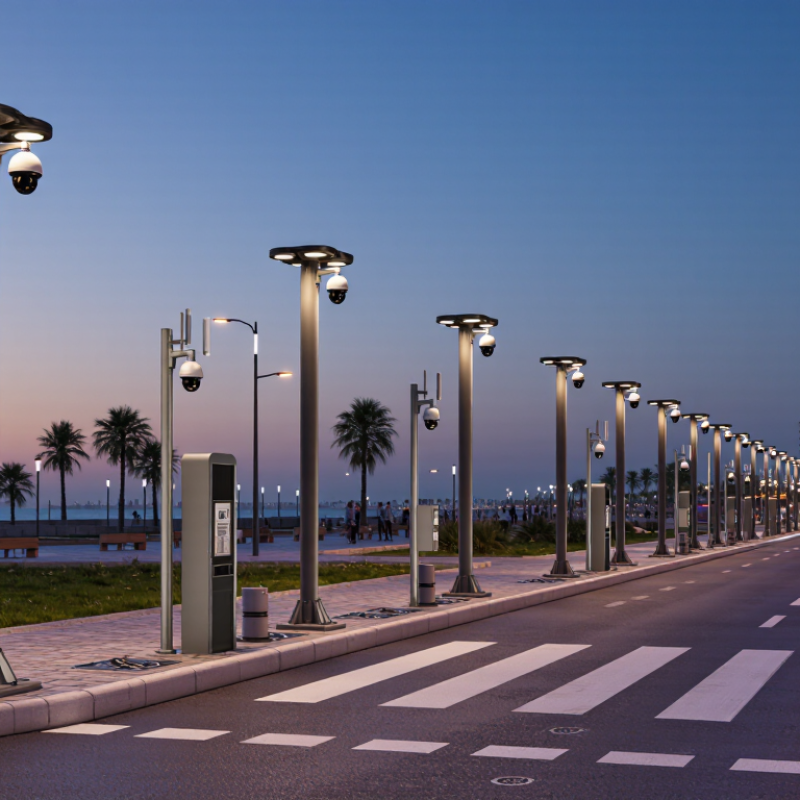
Before comparing intelligent poles, define the job each one must perform. A roadside unit may need cameras, traffic sensors, emergency communications, and clear maintenance access. A campus pole may focus on lighting, pedestrian safety, and public Wi-Fi. List the required functions, then separate essential features from optional ones. This prevents paying for equipment that adds complexity without solving a real site problem.
The operating environment can change the design. Coastal air may corrode exposed metal, while heavy rain can challenge seals and cable entries. In a hot, sunny location, check expected operating temperatures and shade around electronic components. Dust, vibration, nearby trees, and vehicle impact risks also deserve attention. Small details matter. Ask suppliers for documented ingress and corrosion ratings, mounting limits, and service procedures; confirm that these match local site conditions rather than relying on general claims.
Map power and network access before choosing a configuration. A pole with several devices may need more electrical capacity, backup power, or data bandwidth than expected. Check who will inspect it, replace components, and respond when connectivity fails. One assumption may be wrong: planned usage can grow after installation. Leave practical room for future cabling, but avoid specifying capacity without a clear reason. A site survey and a written operating plan help expose gaps before procurement.

An intelligent pole combines lighting, communications, and mounting points, but the feature list alone can be misleading. Compare the actual functions: dimmable LED lighting, sensor interfaces, camera brackets, wireless radios, and accessible power outlets. Ask which components are included and which require separate wiring or software. Small details matter. A neat drawing may not show how technicians reach a junction box after installation.
Material choice affects weight, corrosion resistance, and maintenance. Galvanized steel can suit demanding outdoor sites, while aluminum may reduce pole weight. Check wall thickness, coating method, and finish quality rather than relying on material names alone. Near coastlines, request corrosion-test data and confirm that fasteners use compatible metals. Even then, local exposure varies; a specification sheet cannot fully predict years of weather.
Compare technical specifications against the real site conditions. Review pole height, payload capacity, wind-load assumptions, foundation requirements, and cable-entry dimensions. Confirm IP and IK ratings for relevant enclosures, plus operating temperature and input voltage ranges. Ask for test reports, drawings, and installation guidance that match the quoted configuration. One imperfect detail often gets missed: accessory weight can change structural loading, so calculate the complete assembly, not just the bare pole.
Compare core features, materials, and technical specifications. Material density is one useful starting point when assessing handling and structural design.
Approximate material densities: steel 7,850 kg/m³, aluminum 2,700 kg/m³, concrete 2,400 kg/m³, and glass-fiber-reinforced polymer (FRP) 1,800 kg/m³. Actual values vary by alloy, mix, and product composition. Density alone does not determine pole weight or performance; also check dimensions, wall thickness, load ratings, corrosion protection, and applicable standards.
A supplier’s catalog shows intent, not production discipline. Ask for recent project references, factory capacity, and the roles of its engineering and quality teams. Request a clear production schedule, drawing-approval process, and written procedure for handling design changes. Can the supplier explain how pole dimensions, base plates, and anchor-bolt patterns are checked before shipment?
Assess the pole through documented material grades, wall-thickness measurements, weld inspection records, and corrosion-protection details. For a galvanized pole, request coating-thickness results and clarify where measurements were taken, including edges and welded areas. Review sample inspection reports and confirm batch records connect delivered units to test results.
A sample can look flawless while production varies.
Ask whether independent inspection is possible at agreed stages. It adds time. Plan for it. No checklist catches everything; capable suppliers may still need clearer drawings or another review when project conditions change.
Before placing an order, confirm which standards apply at the installation site. Requirements can differ by country, city, and project type. A pole accepted for a roadway may not meet specifications for a coastal site or utility project. Ask the local engineer or project authority to confirm the required design codes, testing methods, and documentation.
Check certificates against the exact pole model, material, and manufacturing process—not just the supplier’s general credentials. Review test reports for load capacity, weld quality, coating thickness, and dimensional tolerances. For a galvanized pole, request coating measurements and inspection records. Small details matter. A certificate with a mismatched product description can delay approval.
Also verify local rules for foundations, electrical grounding, labeling, and installation permits. Wind loads and soil conditions may change the required pole dimensions. Make sure drawings show anchor bolts, base plates, and access openings clearly. Keep approved documents with the purchase order, and ask who will handle inspections after delivery. I still find compliance easy to overlook when schedules are tight. A brief review before production can prevent costly rework, though paperwork alone cannot replace a qualified local review.
Treat each pole as a delivered, installed asset, not just a factory price. Compare steel grade, coating thickness, design life, accessories, and warranty scope line by line. A cheaper pole may require extra foundations or replacement sooner. That cost is easy to miss. The U.S. Department of Energy’s 2017 lighting forecast estimated that wider LED adoption could save 569 terawatt-hours of electricity annually by 2035. For buyers sourcing poles for lighting projects, efficient fixtures matter, but the supporting structure and maintenance plan also shape long-term value.
Shipping deserves its own calculation. Ask suppliers for packed dimensions, gross weight, container loading plans, and delivery terms. These details affect freight, unloading equipment, and damage risk. The World Bank’s 2023 Logistics Performance Index reports a median 44 days for international shipments from export to arrival. Allow for port handling and inland transport too. A shipment arriving late can leave crews and lifting equipment waiting.
Installation costs vary with soil, access, pole height, and foundation design. Confirm drawings, anchor-bolt templates, and assembly instructions before production. Request spare-part availability and a clear process for warranty claims. Some buyers overlook after-sales response times; that can turn a minor coating or fitting issue into a long site delay. I would also check whether the quoted warranty covers labor and transport, not only replacement parts. DOE projections are not project guarantees, and local conditions can change the economics. Tie estimates to your site and maintenance records.
| Tip | What to Assess | Practical Buyer Check | Why It Matters |
|---|---|---|---|
| 1. Compare total landed cost | Unit price, tooling, packing, freight, insurance, import duties, taxes, customs handling, and inland delivery. | Request an itemized quotation and confirm the delivery term, named destination, and which party pays each charge. | A low factory price may not result in a low delivered cost. Duties and local charges vary by destination and product classification. |
| 2. Check shipping dimensions and weight | Pole length, bundled dimensions, gross weight, container loading plan, and whether sections can be nested or shipped in parts. | Ask for a packing list with dimensions and weights, plus a proposed loading plan. Confirm port, route, and delivery access limits. | Long or bulky poles can require special handling, affect container utilization, and increase inland transport or unloading requirements. |
| 3. Match specifications to the site | Pole height, material, wall thickness, coating, arm or bracket arrangement, access openings, and local wind and environmental conditions. | Provide site requirements and drawings; have a qualified local engineer verify structural loads, foundation design, and applicable codes. | Requirements differ by application and jurisdiction. A suitable design depends on the actual site loads, attachments, and installation conditions. |
| 4. Evaluate installation requirements | Foundation or anchor-bolt interface, lifting points, assembly sequence, required tools, crew skills, and access for lifting equipment. | Request foundation and installation drawings, connection details, lifting guidance, and a clear list of items supplied separately. | Unclear interfaces can cause site delays, rework, or additional equipment and labor costs. |
| 5. Verify materials and quality records | Material grades, coating method and thickness, weld quality, dimensional tolerances, inspection criteria, and traceability documents. | Agree on inspection and acceptance requirements before production; request applicable material certificates and inspection records. | Documented requirements make it easier to check conformance and resolve quality issues before shipment. |
| 6. Confirm schedule and shipping responsibilities | Production lead time, inspection window, booking availability, transit estimate, customs clearance, and delivery appointment requirements. | Request a milestone schedule and identify who arranges export packing, freight, insurance, import clearance, and final delivery. | Production and transit are separate stages; port congestion, customs checks, and local delivery arrangements can affect the project date. |
| 7. Review warranty and after-sales support | Warranty scope and duration, exclusions, claims process, replacement-part availability, technical response channels, and responsibility for freight or labor. | Get the warranty terms in writing and confirm the documents, photos, or inspection reports required to submit a claim. | Clear support terms help buyers plan for maintenance and understand how defects or missing components will be handled. |
Note: Freight, duties, installation costs, engineering requirements, and delivery schedules depend on the product configuration, destination, route, and local regulations. Confirm project-specific details before placing an order.

5960 Odana Road
Madison, WI 53719
T: 608.442.0032
1001 Frank H Street
Waunakee, WI 53597
T: 608-268-7140