Fluted Coupe Glasses bring texture and shape to a familiar stemmed silhouette. Their vertical ridges catch light, while the broad bowl suits sparkling wine, cocktails, and small dessert servings. For wholesale buyers, appearance is only part of the decision. Glass clarity, rim finish, bowl capacity, stem balance, and case packaging all affect the product’s everyday value.
A strong 2026 buying guide should help purchasers compare these details without relying on photographs alone. Ask suppliers for verified dimensions, material specifications, sample availability, and clear information about carton quantities. Inspect a physical sample under bright light. Check whether the flutes feel even, the rim is smooth, and the glass sits steadily on a flat surface. These checks are simple. They matter.
Price also deserves context. A lower unit cost may come with heavier packaging, more breakage risk, or less consistent finishing. Requesting a sample does not guarantee a trouble-free order, but it can reveal issues before a larger commitment. Some details are difficult to judge remotely; even good product images can hide a slightly uneven rim. That is worth admitting. This guide explores styles, practical specifications, supplier questions, and value considerations for wholesale buyers seeking Fluted Coupe Glasses. It aims to make comparison clearer, not to declare one design right for every venue or budget.
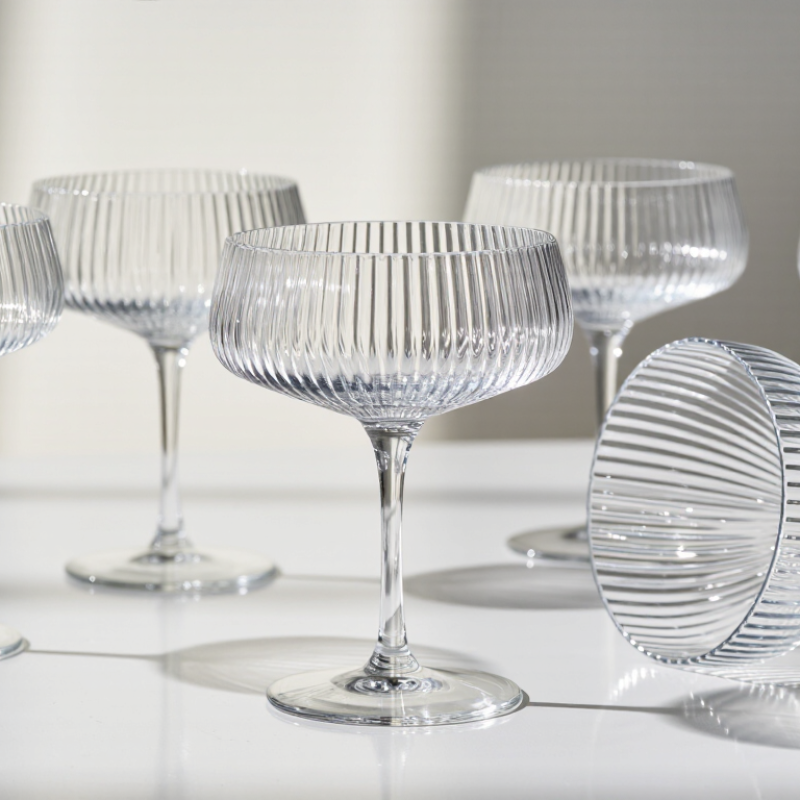
A fluted coupe pairs a shallow, rounded bowl with narrow vertical ribs, a stem, and a stable foot. For wholesale buyers, its definition is practical as well as visual. Look for repeatable dimensions, balanced proportions, and a smooth rim. The ribs should catch light clearly without making the glass awkward to hold. Small details matter.
A useful specification lists capacity, bowl diameter, total height, glass type, and acceptable variation. Request production samples, not just catalog photos. Check filled glasses for wobble, rim consistency, and fit in standard racks. These checks matter in busy hotels, restaurants, and event venues. Packaging deserves attention too. Dividers should limit glass-to-glass contact during transit.
A fluted pattern may disguise minor visual differences, but it cannot fix a thin rim or unstable base. That distinction is easy to miss. When consistency matters, compare samples from more than one production run. Slight variation may occur in pressed glass, so clarify acceptable tolerances before ordering. A coupe should also suit the venue’s washing and storage routine. Not every design will. Test the actual workflow.

Fluted coupe glasses catch light differently from smooth bowls. Their vertical ridges create narrow highlights, making clear glass look more textured on a bar or dining table. Under warm lighting, the pattern can add depth without competing with a colorful cocktail. Subtle, but visible.
The ridges also change how the bowl feels in the hand. They give fingers a tactile surface, though they do not replace a secure stem grip. A very deep flute pattern may feel busy or uncomfortable to some guests. Hand feel is personal. Requesting samples helps buyers judge the glass with wet hands, not just under showroom lights.
For serving, a coupe’s wide opening suits drinks with a visible garnish or a foamy top. Fluting can frame the surface, but it may make fine residue more noticeable after washing. Check the inside of the bowl for grooves that are difficult to reach with standard cleaning tools. Ask suppliers for capacity, rim diameter, packed-case details, and care guidance. Then test a sample through repeated washing and service. One small concern: decorative ridges can make glass-to-glass contact feel louder during busy service, so handling tests matter too.
| Fluted Design | Typical Capacity | Typical Height | Appearance | Grip and Handling | Suitable Servings | Wholesale Buying Considerations |
|---|---|---|---|---|---|---|
| Fine vertical fluting | 5–7 fl oz (150–210 ml) | About 5–6 in (13–15 cm) | Closely spaced ridges create subtle highlights and a refined, decorative look. | Ridges add texture where fingers meet the bowl, but they do not guarantee a more secure grip; the stem and glass shape still matter. | Classic cocktails, sparkling wine, and small dessert portions. | Check ridge consistency, rim finish, and nesting or packing requirements. Fine detailing can make chips or uneven molding easier to notice. |
| Deep vertical fluting | 6–8 fl oz (180–240 ml) | About 5.5–6.5 in (14–16.5 cm) | Pronounced grooves create stronger shadows and a more visibly textured bowl. | Deeper grooves can provide a more noticeable tactile surface, though wet hands and condensation may still make glassware slippery. | Spirit-forward cocktails, sparkling serves, and visually layered drinks. | Request samples to assess groove depth, cleaning access, and glass clarity. Confirm carton protection for the wider bowl and stem. |
| Fine radial fluting | 5–7 fl oz (150–210 ml) | About 5–6 in (13–15 cm) | Ridges radiating around the bowl create a bright, faceted effect as light moves across the glass. | The textured bowl offers tactile cues, but the smooth stem remains the main handling point when the glass is carried by its stem. | Champagne cocktails, aperitifs, and small plated desserts. | Compare the appearance under both natural and indoor lighting. Confirm that decorative ridges do not complicate washing or visual inspection. |
| Fluted bowl with smooth stem | 6–8 fl oz (180–240 ml) | About 5.5–6.5 in (14–16.5 cm) | Combines a textured bowl with a clean stem for contrast between decorative and simple forms. | The smooth stem supports conventional stemware handling; the fluted bowl can be held when needed, but warmth from hands may transfer to the drink. | Classic cocktails and sparkling wine service. | Inspect stem alignment, balance, and joint finish. These factors can affect stability and breakage risk during service. |
| Short-stem fluted coupe | 6–8 fl oz (180–240 ml) | About 4.5–5.5 in (11.5–14 cm) | A lower profile gives the textured bowl a compact, contemporary presence. | The shorter stem can feel more stable in some settings, but the bowl may be held more often; fluting does not replace careful handling. | Casual cocktail service, tasting menus, and compact bar setups. | Check shelf and rack fit, stackability if applicable, and the usable capacity below the rim to support consistent portions. |
| Wide-bowl fluted coupe | 7–9 fl oz (210–270 ml) | About 5–6.5 in (13–16.5 cm) | The broad bowl emphasizes the fluted pattern and gives drinks a generous presentation area. | The wider bowl can be easier to hold by its sides, but it also exposes more glass to fingerprints and contact during service. | Garnished cocktails, dessert coupes, and larger sparkling serves. | Verify outer-bowl diameter, storage footprint, and case-pack protection. Larger capacity does not indicate a recommended fill level. |
For wholesale buyers, material choice shapes weight, clarity, breakage risk, and cost. Most fluted coupe glasses use soda-lime glass, which suits everyday service and large production runs. Borosilicate glass handles temperature changes better, but it may cost more and feel different in hand. Ask for the glass type, capacity, height, rim diameter, and weight in writing. A 250 ml bowl, for example, can look quite different when its rim is wide or its stem is short.
Tips: Request samples from the intended production method. Check the rim for chips, the flutes for even spacing, and the base for wobble. A sample can be excellent while a bulk run varies; that detail deserves attention.
Also confirm dimensional tolerances, carton quantity, protective inserts, and drop-test results before placing an order. Fluted grooves can catch reflections beautifully, yet uneven molding may make a set look inconsistent under bar lighting. Ask whether glasses are dishwasher-tested if commercial washing is expected. Verify food-contact documentation for your target market, rather than relying on a verbal assurance.
Compare packed shipping weight as well as unit price. A slightly heavier glass may feel premium, but it can raise freight costs and increase handling fatigue. Decide which compromise fits your customers.
When evaluating fluted coupe glasses for wholesale buying, request a production sample, not just a catalog photo. Check that the glass sits flat on a level counter and feels balanced when lifted by the stem. Small details matter. Uneven fluting can make a set look inconsistent, especially under bright bar lighting. Compare several pieces from the same sample carton for matching height, bowl shape, and clarity.
Confirm the usable capacity and overall dimensions against your menu and storage space. A wide bowl may suit sparkling cocktails, but it can take up more shelf room and feel less stable in crowded service. Inspect the rim for smoothness and the stem-to-bowl join for visible flaws. Ask how each piece is packed; dividers should prevent bowls from knocking together during transit. Request written specifications for carton quantity, replacement policy, and expected lead time. These details are easy to overlook when the sample looks good.
Durability claims need context. Ask whether the glasses are intended for handwashing or commercial dishwashing, and test a small batch under your actual cleaning routine before placing a large order. Thicker glass may be more practical for busy venues, though it can feel less delicate in hand. There is no perfect balance. I would also compare the delivered batch with the approved sample; suppliers and buyers can both miss small differences when reviewing only one or two pieces.
For wholesale buyers, a fluted coupe glass should be judged by more than its silhouette. Ask suppliers for clear specifications: capacity, height, rim diameter, glass thickness, and weight. Request a sample from the same production line proposed for the order. Check that the stem feels steady and the rim is smooth. Small details matter. A sample can look flawless, yet mass-produced pieces may vary slightly.
Compare quotes on equal terms. Confirm whether the price includes protective packaging, export cartons, and any customization. Ask for the minimum order quantity and the cost of a repeat order. A low unit price can become less attractive when fragile glasses need extra dividers or stronger cartons. I find packaging easy to underestimate; it is worth asking for carton dimensions and the number of glasses per carton before approving a quote.
Get delivery terms in writing. Confirm the production lead time, dispatch window, shipping method, and who arranges transport. Ask how delays are reported and what evidence is needed for damaged goods. Request photos of packed cartons before shipment, especially for a first order. Delivery estimates are not guarantees. Build a modest buffer into your launch schedule, and check that the supplier’s stated lead time starts after sample approval, not merely after the deposit.
What to Check in Suppliers, Pricing, and Delivery Terms
This illustrative 1–10 buyer-priority scale is a planning framework, not a market survey. Compare landed cost alongside glass quality, confirmed lead times, minimum order quantities, protective packaging, and payment terms when evaluating supplier quotes.

5960 Odana Road
Madison, WI 53719
T: 608.442.0032
1001 Frank H Street
Waunakee, WI 53597
T: 608-268-7140