2026 Best Door Installers for Global Buyers
Choosing the right door installers can shape a building’s security, comfort, appearance, and long-term maintenance costs. For global buyers, the decision involves more than comparing prices or browsing attractive project photos. Installer experience, technical training, local licensing, insurance, product compatibility, and after-sales support all deserve careful attention. A skilled team should understand exterior doors, interior systems, fire-rated products, thermal performance, moisture control, and smart-entry equipment.
Real installation quality often appears in small details. Frames must sit squarely. Hinges should move without resistance. Seals should meet evenly, even during heavy rain or temperature changes. Experienced door installers also confirm wall conditions before cutting or fixing anything. Clear measurements, written specifications, and documented handover records can prevent expensive misunderstandings across borders. Translation support may help, but it cannot replace technical clarity.
This 2026 guide examines installers serving international customers, with attention to verifiable experience and responsible business practices. Company websites can look impressive. They are not always enough. Buyers should request recent references, project photographs, warranty terms, installation timelines, and evidence of relevant qualifications. Regional building requirements also differ, so professional advice from a local inspector or architect may remain necessary. That step is easy to overlook.
Some recommendations may still require personal judgment. No ranking can predict every site condition, delivery delay, or communication problem. A reliable installer explains limitations rather than promising perfection. Buyers should compare complete quotations, including preparation work, transport, taxes, hardware, disposal, and future service. Practical checks matter. The best choice is usually the team that combines proven workmanship, honest communication, and support after the final door closes.
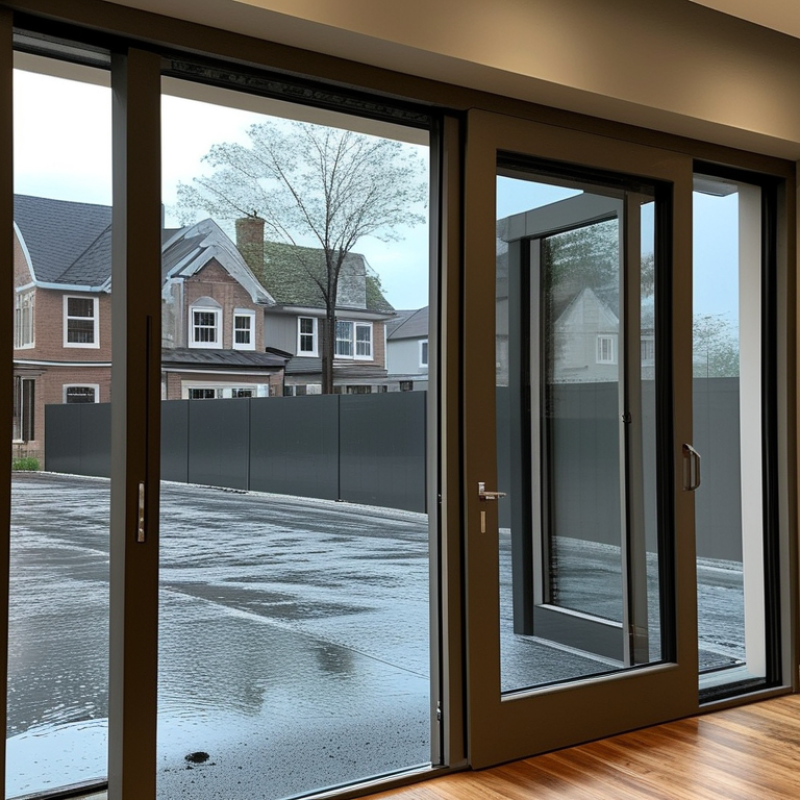
Global Energy Context: Buildings Consume About 30% of Final Energy (IEA)
In 2026, the best door installers for global buyers should understand energy performance, not only appearance. The IEA reports that buildings consume about 30% of final energy worldwide. That figure makes every opening important. A poorly fitted door can create drafts, moisture problems, and unnecessary heating or cooling demand.
Experienced installers inspect the wall condition before measuring. They check frame alignment, threshold height, drainage, seals, and surrounding insulation. On a coastal project, salt exposure may affect hardware choices. In a cold region, thermal bridging around the frame deserves careful attention. In a hot climate, shading and solar heat gain also matter. Good installers explain these details in clear language and provide test records, maintenance guidance, and realistic performance expectations.
No installer gets every site right. Renovation walls are rarely perfect. Even a high-performance door may underperform when the opening is uneven or rushed. Buyers should request references from similar climates and ask how defects were handled. Independent certifications can support trust, but they do not replace skilled workmanship. A careful installer measures twice, documents changes, and admits uncertainty when local conditions require further assessment. Small installation decisions often shape a building’s comfort for many years.
2026 Best Door Installers for Global Buyers - Global Energy Context: Buildings Consume About 30% of Final Energy (IEA)
A region-neutral comparison framework for selecting qualified door installation contractors. Recommendations are based on climate suitability, code familiarity, installation quality, energy performance, documentation, and after-sales capability—not on company or brand names.
| Target Market | Recommended Installer Profile | Relevant Codes or Standards to Verify | Door Performance Priorities | Required Installation Evidence | Best-Fit Project Types | Buyer Due-Diligence Questions |
|---|---|---|---|---|---|---|
| European Union and EEA |
Installer experienced with local building-control procedures, external pedestrian doorsets, airtightness detailing, and thermal-bridge reduction.
|
EN 14351-1 for external pedestrian doorsets; applicable Construction Products Regulation requirements; national energy-performance rules; EN ISO 10077 methods for thermal transmittance. | Low U-value Airtightness Rain resistance Security Threshold accessibility | Product declaration, CE-related documentation where applicable, installation instructions, perimeter-sealing method, fixing schedule, and photographs of concealed interfaces. | New residential buildings, energy renovations, apartment entrances, schools, offices, and low-energy buildings. | Can you provide a local installation reference? How will the threshold be insulated and drained? Who verifies airtightness and final adjustment? |
| United Kingdom |
Installer familiar with Building Regulations, replacement-door requirements, security testing, and retrofit conditions in older masonry buildings.
|
Approved Document L for energy efficiency; PAS 24 where enhanced doorset security is required; relevant BS EN product and weather-performance standards; local building-control requirements. | Thermal efficiency Security Weather sealing Fire separation | Installer competency record, product certification, cavity or masonry fixing details, sealant specification, and completion documentation for regulated work. | Residential replacement doors, apartment blocks, schools, healthcare facilities, and commercial refurbishments. | Is the proposed doorset suitable for the building type? Will the work require building-control notification? How are damp, cold bridging, and uneven openings handled? |
| United States and Canada |
Contractor experienced with local energy codes, fenestration installation, flashing, water management, and regional wind or snow conditions.
|
IECC or ASHRAE 90.1 as adopted locally; NFRC certification and rating procedures where applicable; local structural, fire, accessibility, and wind-load requirements; CSA requirements in Canada where applicable. | U-factor Air leakage Solar control Impact resistance Water management | Permit records, manufacturer-approved installation method, sill-pan or equivalent drainage detail, flashing sequence, sealant compatibility, and final hardware adjustment. | Single-family housing, multifamily buildings, schools, retail facilities, offices, and cold-climate renovations. | Which adopted code edition applies? Is the installer insured and licensed locally? How will the sill, head flashing, and rough-opening tolerances be documented? |
| Australia and New Zealand |
Installer capable of working with high solar exposure, coastal corrosion, bushfire or cyclone requirements where applicable, and detailed weatherproofing.
|
National Construction Code requirements; AS 2047 for windows and external glazed doors where applicable; local wind, bushfire, accessibility, and energy provisions; New Zealand Building Code requirements. | Solar heat control Wind resistance Corrosion resistance Water penetration | Site wind classification, product test documentation, corrosion-category selection, sill drainage detail, fastener specification, and compliance records. | Coastal homes, detached housing, apartments, schools, commercial buildings, and cyclone-prone or bushfire-prone areas subject to local rules. | What wind region and exposure category apply? Is the hardware suitable for coastal conditions? How are water drainage and replacement seals maintained? |
| Japan and South Korea |
Installer familiar with high-performance envelopes, seismic movement, compact urban openings, condensation control, and local inspection procedures.
|
Applicable JIS or KS product standards; local energy-efficiency rules; fire-compartmentation, seismic, accessibility, and building-control requirements. | Condensation control Seismic tolerance Airtightness Fire performance | Opening survey, movement-joint detail, insulation continuity plan, fire-rating documentation where required, and commissioning or adjustment record. | Urban apartments, high-rise residential projects, offices, public buildings, and deep-energy renovation projects. | How will the frame accommodate structural movement? What condensation-control calculation or method is used? Are fire and compartment requirements documented? |
| China |
Installer with provincial or municipal code experience, strong site-measurement procedures, and capability to coordinate with general contractors and inspectors.
|
Applicable national, industry, and local standards for building doors and windows; energy-efficiency requirements under the relevant provincial or municipal code; fire and accessibility provisions. | Thermal insulation Air tightness Rain resistance Fire compliance | Approved shop drawings, material certificates, factory or site inspection records, anchor layout, sealant compatibility, and handover documentation. | Residential developments, commercial towers, public buildings, industrial facilities, and large-scale retrofit programs. | Which local code and inspection authority apply? Who is responsible for opening measurements? How are design changes and non-conforming installations recorded? |
| Middle East and North Africa |
Installer experienced with extreme heat, dust, intense solar radiation, high-performance façades, and local civil-defense or fire requirements.
|
Local building regulations; ASHRAE 90.1 or equivalent energy provisions where adopted; fire and civil-defense requirements; project-specific façade and testing specifications. | Solar control Thermal breaks Dust sealing Fire rating UV durability | Solar-load design coordination, thermal-break details, fire-stopping records, sealant data, mock-up approval, and air/water test results where specified. | Hotels, hospitals, airports, offices, shopping centers, villas, and high-rise developments. | How are solar heat gain and thermal bridging controlled? Is the sealant rated for local temperatures and UV exposure? Who performs façade testing and rectification? |
| Southeast Asia |
Installer skilled in hot-humid climates, wind-driven rain, mold prevention, corrosion control, and coordination with air-conditioned building envelopes.
|
National building and energy codes; local fire, accessibility, wind, and flood requirements; project specifications based on applicable ISO, EN, ASTM, or national standards. | Moisture control Solar reduction Corrosion resistance Air leakage | Moisture-management plan, drainage-path inspection, anti-corrosion hardware specification, sealant data, and site water-penetration testing where required. | Condominiums, hotels, hospitals, schools, offices, retail buildings, and tropical residential renovations. | How will condensation and mold risk be reduced? Are fasteners and hardware suitable for coastal humidity? What is the maintenance plan for seals and drainage channels? |
| Latin America |
Installer with local permit knowledge, experience in masonry and concrete openings, and proven capability in rain, solar exposure, security, and retrofit work.
|
National and municipal construction codes; local energy-efficiency, fire, accessibility, seismic, wind, and security provisions; project-specific product standards. | Security Rain resistance Solar control Seismic tolerance | Local license or registration where required, opening survey, fixing and anchoring plan, waterproofing detail, product certificates, and final acceptance checklist. | Residential developments, retail properties, schools, hospitals, offices, and retrofit projects in seismic or high-rainfall regions. | Which local authority approves the installation? How are irregular concrete openings corrected? Can the installer provide warranty service and replacement-part availability? |
| Sub-Saharan Africa |
Installer able to manage variable site conditions, high solar exposure, heavy rainfall, dust, security requirements, and local material availability.
|
National or municipal building codes; project fire, accessibility, wind, security, and energy specifications; applicable international standards stated in the contract. | Durability Security Rain protection Ventilation Maintainability | Site-condition survey, water-shedding details, corrosion-resistant hardware specification, spare-parts plan, workmanship inspection, and documented handover. | Schools, healthcare buildings, offices, residential compounds, retail facilities, and public-sector projects. | Which materials and spare parts are locally available? How will the installer protect unfinished openings from rain and dust? What response time is included in the warranty? |
Global energy context: The International Energy Agency reports that buildings account for approximately 30% of global final energy consumption. Door installation quality affects air leakage, moisture control, thermal bridging, occupant comfort, and the performance of the wider building envelope.
Selection principle: The strongest installer is the one that can demonstrate compliance with the destination market’s adopted codes, provide documented installation details, control the threshold and perimeter interfaces, and support inspection, maintenance, and warranty work.
Buyer checklist: Confirm local licensing, insurance, code responsibility, product compatibility, opening measurement, air and water management, fire requirements, accessibility, warranty scope, maintenance access, and availability of replacement hardware and seals.
Reference framework: International Energy Agency (IEA), building-sector energy analysis; regional building authorities and standards organizations, including EN, ISO, NFRC, IECC, ASHRAE, NCC, JIS, KS, and applicable national or municipal codes.
Related Posts
-

How to Choose the Right Door Installers for Your Home?
-

How to Choose the Best Door Installers for Your Project?
-
How to Choose the Best Door Installers for Your Home?
-

China Top Front Entry Doors for Your Home Style Guide?
-
Enhancing Curb Appeal: The Top Benefits of Choosing a Wood Front Door for Your Home
-

What is a Window Contractor and How to Choose the Best?